






DFS rates in patients with stage IB-IIIA EGFRm NSCLC15
- 2 YEARS 90% TAGRISSO
 55% Placebo
 - 3 YEARS 85% TAGRISSO 44% Placebo
- 4 YEARS 73% TAGRISSO 38% Placebo
In resectable NSCLC
MOST COMMON SITES OF METASTASIS AFTER RESECTION IN NSCLC1,2*

 Brain:
 A systematic review and meta-analysis of 15 studies analyzed the prognostic impact of lymph node micrometastases/isolated tumor cells (ITCs) postresection in patients with stage I-IIIA NSCLC4‡§
DFS RATE AT 5 YEARS4
in patients with
lymph node micrometastases/ITCs
in patients without
lymph node micrometastases/ITCs
OS RATE AT 5 YEARS4
in patients with
lymph node micrometastases/ITCs
in patients without
lymph node micrometastases/ITCs
*Chouaid et al (2018) conducted a retrospective observational study in 831 patients with complete resection of stage IB-IIIA NSCLC with no information on EGFRm status. Of the 831 patients, 200 experienced metastatic recurrence during the observed study follow-up period.2
†Based on a single-center retrospective review of 1640 patients who had undergone resection for stage I-IIIA NSCLC from a prospectively maintained database to compare patterns of recurrence. 181 of 346 patients with stage IIIA NSCLC (52%) and 257 of 1294 patients with stage I-II NSCLC (20%) developed recurrences. Staging was based on the 7th edition of the AJCC tumor, node, and metastasis classification of lung cancer.3
‡Hüyük et al (2023) conducted a systematic review and meta-analysis extracting DFS and OS data from 15 studies with a total of 1893 patients with stage I-IIIA NSCLC, with and without occult lymph node micrometastasis/isolated tumor cells, after surgical resection. Meta-analyses for OS and DFS were performed on 14 and 8 studies, respectively. Survival probabilities for OS and DFS at different timepoints were extracted from published survival curves. OS probabilities were reported at every 6 months after surgery until 5-year follow-up for both micrometastasis and no micrometastasis. DFS was reported at every 3 months after surgery for the first 2-year follow-up, and at every 6 months after 2 years of follow-up until 5 years of follow-up.4
§According to the American Joint Committee on Cancer, micrometastases are defined as clusters of tumor cells measuring between 0.2 mm and 2.0 mm in greatest diameter, and ITCs are defined as single tumor cells or small clusters of cells, smaller than 0.2 mm in greatest diameter.6
In resectable EGFRm NSCLC

*Prevalence of EGFR mutations in NSCLC adenocarcinoma was based on data from 2 references: Sholl et al (2015) performed mutation analysis on 1007 cases with confirmed diagnosis of lung adenocarcinoma. Testing was performed on 987 cases for EGFR sensitizing mutations (exon 19 deletions, EGFR L858R mutations, EGFR G719X mutations, EGFR L861Q mutations) and other EGFR mutations (any one or more mutations in EGFR other than exon 19 deletions, L858R mutations, G719X mutations, or L861Q mutations). Out of 987 cases, 331 cases that were analyzed had stage I-III NSCLC and 632 had stage IV NSCLC. D’Angelo et al (2012) analyzed tumor specimens from a cohort of 1118 patients with stage I-III surgically resected lung adenocarcinomas with EGFR exon 19 deletions and L858R mutations only.7,8,11,12
†Based on a single-center, retrospective study of 282 patients with early or locally advanced lung adenocarcinoma; 142 were EGFRm and 140 were EGFR wild-type. The majority of both groups received standard-of-care treatment. Standard-of-care was defined as surgery or RT + cytotoxic platinum-based doublet therapy when appropriate.9
‡Overall recurrence across all stages was ~23% in patients who were EGFRm and ~21% in patients who were EGFR wild-type. P-value corresponds to data calculation 21/29=0.72 and 31/32=0.97. The P-value of 0.007 was for the overall population (stage I-III). The only P-value by stage that was significant was for stage I (P=0.02).9
§Based on a meta-analysis that examined the incidence of brain metastases in EGFRm or EGFR wild-type NSCLC. 8152 patients were included from 22 multinational studies. 16 studies included patients with stage IV disease. 2664 patients had an EGFR mutation.10
UPDATED DFS DATA WITH ADDITIONAL 2 YEARS OF FOLLOW-UP
(Prespecified exploratory analysis)
>5
years
DFS rates in patients with stage IB-IIIA EGFRm NSCLC15
55% Placebo 44% Placebo 38% PlaceboMedian time of total treatment exposure at updated DFS data cutoff was 35.8 months in the adjuvant TAGRISSO arm and 25.1 months in the placebo arm15

Osimertinib (TAGRISSO) is the first and only EGFR TKI recommended by NCCN Guidelines as an adjuvant treatment option for completely resected stage IB-IIIA EGFRm (exon 19 deletion, L858R) NSCLC.17‡§
‡The NCCN Guidelines for NSCLC provide recommendations for certain individual biomarkers that should be tested and recommend testing techniques, but do not endorse any specific commercially available biomarker assays or commercial laboratories.17
§Osimertinib is recommended for patients with completely resected stage IB-IIIA, stage IIIB (T3, N2), EGFR (exon 19 deletion, exon 21 L858R) NSCLC who received previous adjuvant chemotherapy or are ineligible to receive platinum-based chemotherapy.17
INITIAL DFS ANALYSIS: In resected stage IB-IIIA, median DFS was not reached (95% CI: NE, NE) for TAGRISSO vs 27.5 months (95% CI: 22.0, 35.0) for placebo; HR=0.20 (95% CI: 0.15, 0.27); P<0.0001; N=682.13*
UPDATED DFS ANALYSIS
65.8 months (95% CI: 61.7, NC) median DFS for TAGRISSO
and 28.1 months (95% CI: 22.1, 35.0) for placebo
65.8 months (95% CI: 61.7, NC)
median DFS for TAGRISSO and 28.1 months
(95% CI: 22.1, 35.0) for placebo
in resected stage IB-IIIA13‡
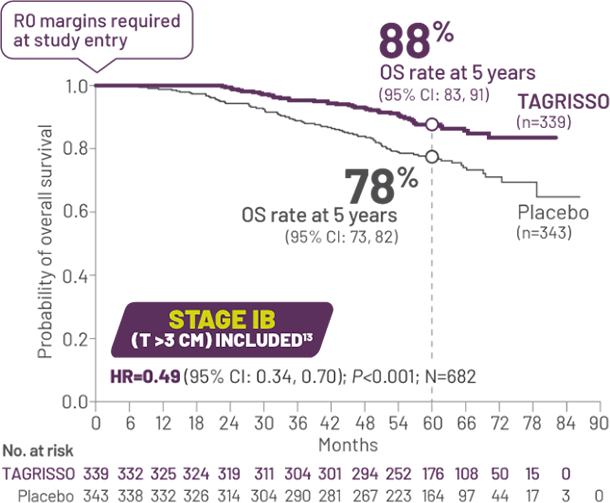
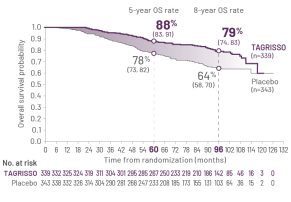
Statistically significant OS
51%
reduced risk of death
vs placebo
(95% CI: 0.34, 0.70); P<0.0001; N=682
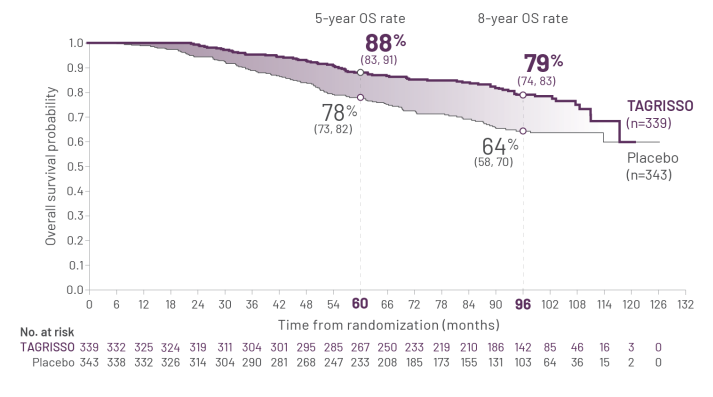
The only adjuvant targeted treatment proven to significantly extend survival after resection
51%
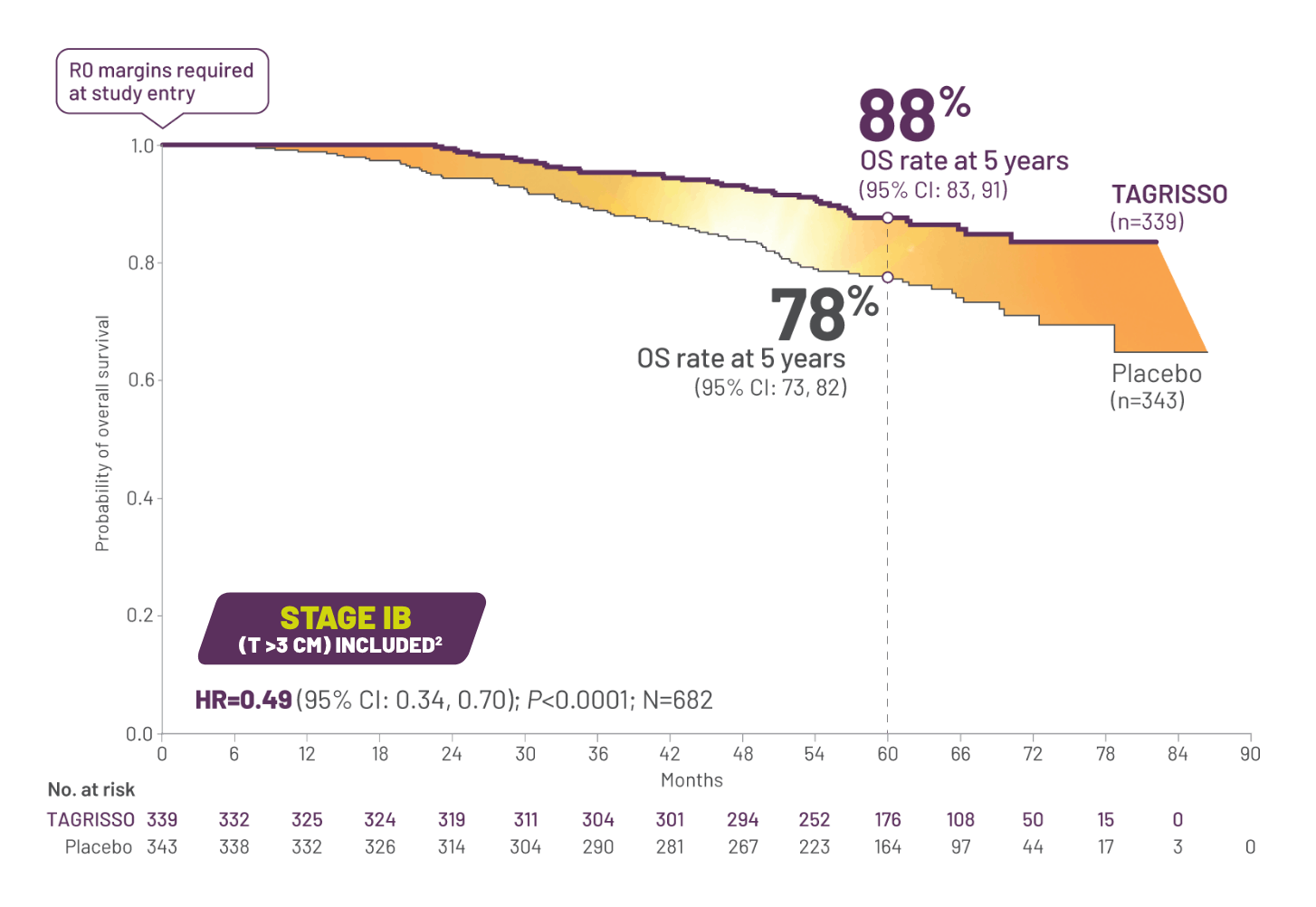
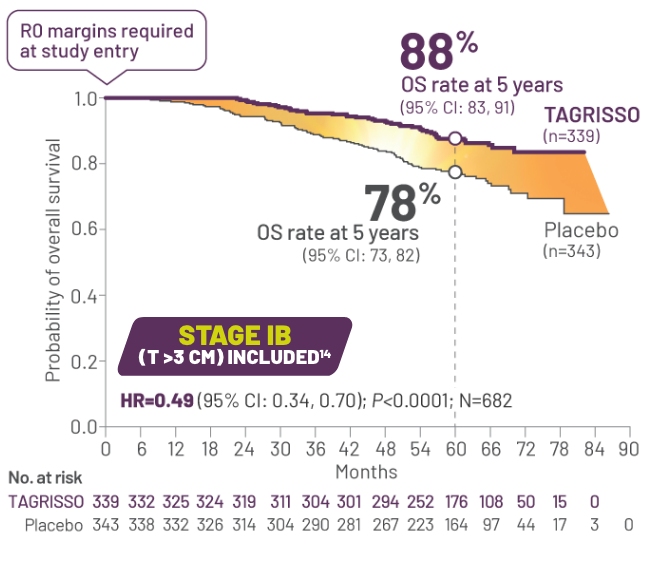
51% reduced risk of death vs placebo1
88% OS rate at 5 years with TAGRISSO
(95% CI: 83, 91)15
OS IN RESECTED STAGE IB-IIIA EGFRm NSCLC:
OS IN RESECTED STAGE II-IIIA EGFRm NSCLC:
OS HR: 0.49 (95% CI: 0.33, 0.73); P=0.0004; n=47013‡¶

Osimertinib (TAGRISSO) is the first and only EGFR TKI with an NCCN Category 1 recommendation for adjuvant treatment following surgical resection in patients with EGFRm (exon 19 deletion, L858R mutation) NSCLC and is recommended for a duration of 3 years.17#**
#See the NCCN Guidelines for detailed recommendations, including other treatment options.
**Osimertinib is recommended following surgical resection in patients with EGFRm (exon 19 deletion, L858R mutation) NSCLC who received previous adjuvant chemotherapy or are ineligible to receive platinum-based chemotherapy.17
*Secondary endpoint in the ADAURA initial analysis. Primary endpoint in the initial analysis at 2 years was DFS in stage II-IIIA patients. Median DFS was not reached for TAGRISSO (95% CI: 38.8, NE) vs 19.6 months (95% CI: 16.6, 24.5) for placebo (HR=0.17 [95% CI: 0.12, 0.23]; P<0.0001).13,15
†Secondary endpoint in the ADAURA trial with 2 additional years of follow-up. Primary endpoint in the updated analysis was DFS in stage II-IIIA patients; median DFS was 65.8 months for TAGRISSO (95% CI: 54.4, NC) and was 21.9 months (95% CI: 16.6, 27.5) for placebo (HR=0.23 [95% CI: 0.18, 0.30]).14
‡Secondary endpoint in ADAURA.13
§OS maturity was 18% (TAGRISSO; 12%, placebo; 24%).15
||One hundred eighty-four patients in the placebo arm received a subsequent therapy. Of these patients, 88% (n=162) received an EGFR TKI, most frequently TAGRISSO (43%; n=79).15,18
¶OS maturity was 21% (TAGRISSO; 15%, placebo; 27%).15
*Secondary endpoint in the initial analysis. Primary endpoint in initial analysis at 2 years was DFS in patients with resected stage II-IIIA EGFRm NSCLC. Median DFS was not reached for TAGRISSO (95% CI: 38.8, NE) and was 19.6 months (95% CI: 16.6, 24.5) for control arm (HR=0.17 [95% CI: 0.12, 0.23]; P<0.0001).14
†Control arm=placebo.
In ADAURA, patients without prior adjuvant chemotherapy were treated as follows14¶#:

HR0.36
(95% CI: 0.24, 0.55)15
Extend the benefits of adjuvant therapy to more patients with TAGRISSO
OR
Pill image is not actual size.
*Prespecified exploratory analysis using the updated DFS data cutoff. Median follow-up for DFS in all patients was 44.2 months for TAGRISSO and 27.7 months for placebo arm.15
†Stage IB-IIIA.
‡AJCC 7th edition.
§Secondary endpoint in the updated DFS analysis (DFS in stage IB-IIIA patients): HR=0.27 (95% CI: 0.21, 0.34); N=682.15
||In ADAURA, delivery of adjuvant chemotherapy was allowed, but not mandatory, and was decided by the physician and patient prior to study enrollment.18
¶Exploratory subgroup analysis. In patients who did not receive prior adjuvant chemotherapy in ADAURA, the interval between surgery and adjuvant TAGRISSO was up to 10 weeks.14
#In the ADAURA trial, patients received adjuvant TAGRISSO for up to 3 years or until disease recurrence or unacceptable toxicity.14
**Exploratory subgroup analysis. In patients who received prior adjuvant chemotherapy in ADAURA, the interval between surgery and adjuvant TAGRISSO was up to 26 weeks.14
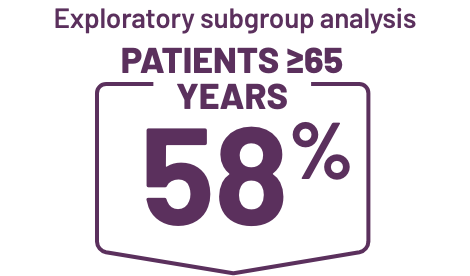
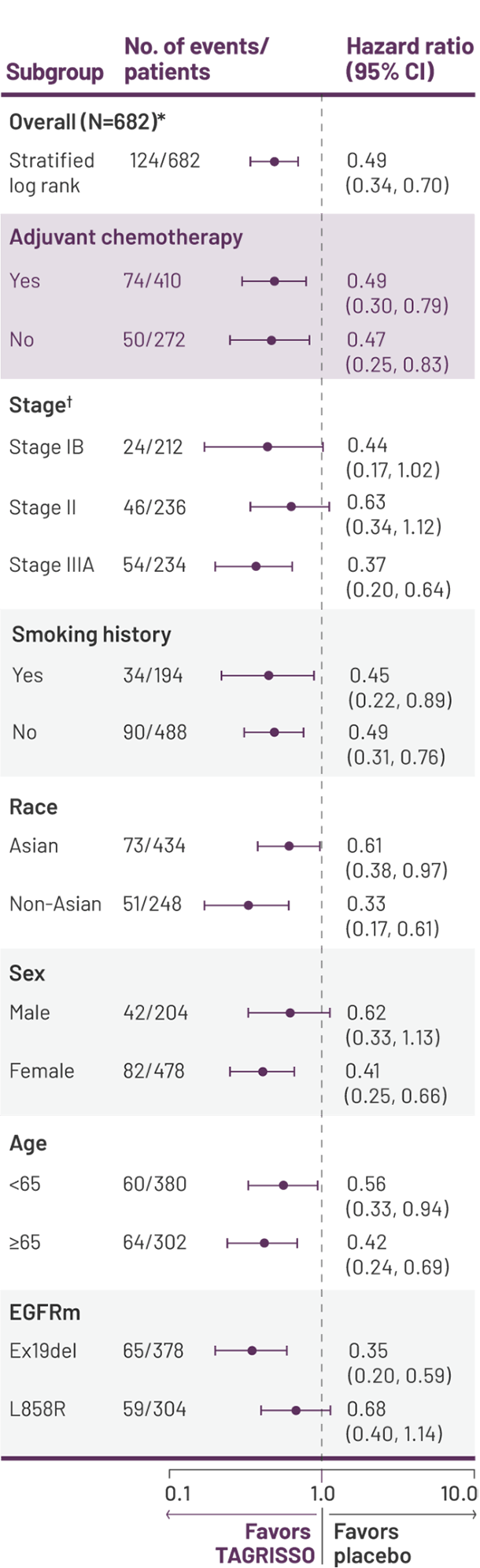
Adjuvant TAGRISSO reduced the risk of death in most prespecified subgroups, including patients 65 years of age or older18
*Prespecified exploratory analysis using the updated DFS data cutoff. Median follow-up for DFS in all patients was 44.2 months for TAGRISSO and 27.7 months for placebo arm.15
†Stage IB-IIIA.
‡AJCC 7th edition.
§Secondary endpoint in the updated DFS analysis (DFS in stage IB-IIIA patients): HR=0.27 (95% CI: 0.21, 0.34); N=682.15
||In ADAURA, delivery of adjuvant chemotherapy was allowed, but not mandatory, and was decided by the physician and patient prior to study enrollment.18
¶Exploratory subgroup analysis. In patients who did not receive prior adjuvant chemotherapy in ADAURA, the interval between surgery and adjuvant TAGRISSO was up to 10 weeks.14
#In the ADAURA trial, patients received adjuvant TAGRISSO for up to 3 years or until disease recurrence or unacceptable toxicity.14
**Exploratory subgroup analysis. In patients who received prior adjuvant chemotherapy in ADAURA, the interval between surgery and adjuvant TAGRISSO was up to 26 weeks.14
WITHOUT PRIOR ADJUVANT CHEMOTHERAPYII
In ADAURA, patients without prior adjuvant chemotherapy were treated as follows13||:

HR0.47
(95% CI: 0.25, 0.83)15
OR
WITH PRIOR ADJUVANT CHEMOTHERAPY#
In ADAURA, patients with prior adjuvant chemotherapy were treated as follows13II:
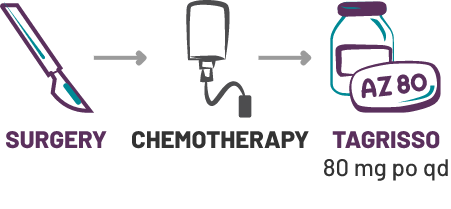

HR0.49
(95% CI: 0.30, 0.79)15
Pill image is not actual size.
*Prespecified exploratory analysis using the updated DFS data cutoff. Median follow-up for DFS in all patients was 44.2 months for TAGRISSO and 27.7 months for placebo arm.15
†Stage IB-IIIA.
‡AJCC 7th edition.
§Secondary endpoint in the updated DFS analysis (DFS in stage IB-IIIA patients): HR=0.27 (95% CI: 0.21, 0.34); N=682.15
||In ADAURA, delivery of adjuvant chemotherapy was allowed, but not mandatory, and was decided by the physician and patient prior to study enrollment.18
¶Exploratory subgroup analysis. In patients who did not receive prior adjuvant chemotherapy in ADAURA, the interval between surgery and adjuvant TAGRISSO was up to 10 weeks.14
#In the ADAURA trial, patients received adjuvant TAGRISSO for up to 3 years or until disease recurrence or unacceptable toxicity.14
**Exploratory subgroup analysis. In patients who received prior adjuvant chemotherapy in ADAURA, the interval between surgery and adjuvant TAGRISSO was up to 26 weeks.14
Although prior adjuvant chemotherapy use was allowed, it was not required in the ADAURA trial19
PRIOR ADJUVANT CHEMOTHERAPY USE IN ADAURA BY STAGE20
| Characteristic | TAGRISSO | Placebo |
|---|---|---|
| Stage IB | 25% (n=27) | 28% (n=30) |
| Stage II | 70% (n=80) | 73% (n=85) |
| Stage IIIA | 81% (n=95) | 78% (n=92) |
*Prespecified exploratory analysis using the updated DFS data cutoff. Median follow-up for DFS in all patients was 44.2 months for TAGRISSO and 27.7 months for placebo arm.15
†Stage IB-IIIA.
‡AJCC 7th edition.
§Secondary endpoint in the updated DFS analysis (DFS in stage IB-IIIA patients): HR=0.27 (95% CI: 0.21, 0.34); N=682.15
||In ADAURA, delivery of adjuvant chemotherapy was allowed, but not mandatory, and was decided by the physician and patient prior to study enrollment.18
¶Exploratory subgroup analysis. In patients who did not receive prior adjuvant chemotherapy in ADAURA, the interval between surgery and adjuvant TAGRISSO was up to 10 weeks.14
#In the ADAURA trial, patients received adjuvant TAGRISSO for up to 3 years or until disease recurrence or unacceptable toxicity.14
**Exploratory subgroup analysis. In patients who received prior adjuvant chemotherapy in ADAURA, the interval between surgery and adjuvant TAGRISSO was up to 26 weeks.14
*Stage IB-IIIA population.18
†Based on AJCC 7th edition.15
‡In ADAURA, delivery of adjuvant chemotherapy was allowed, but not mandatory, and was decided by the physician and patient prior to study enrollment. 60% of patients received prior adjuvant chemotherapy (adjuvant TAGRISSO arm: stage IB, 25%; stage II, 70%; stage IIIA, 81%; placebo arm: stage IB, 28%; stage II, 73%; stage IIIA, 78%).19,20
¶In the ADAURA trial, patients received adjuvant TAGRISSO for up to 3 years or until disease recurrence or unacceptable toxicity.12
§OS results for overall patient population (completely resected stage IB-IIIA EGFRm NSCLC): median OS was not reached in either arm (HR=0.49 [95% CI: 0.34, 0.70]; P<0.0001).13
IIIn patients who did not receive prior adjuvant chemotherapy in ADAURA, the interval between surgery and adjuvant TAGRISSO was up to 10 weeks.13
#In patients who received prior adjuvant chemotherapy in ADAURA, the interval between surgery and adjuvant TAGRISSO was up to 26 weeks.13
**TAGRISSO is indicated as adjuvant therapy after tumor resection in adult patients with non-small cell lung cancer (NSCLC) whose tumors have epidermal growth factor receptor (EGFR) exon 19 deletions or exon 21 L858R mutations, as detected by an FDA-approved test.13
Please see the serious Warnings and Precautions associated with TAGRISSO.
In resectable EGFRm NSCLC
ADVERSE REACTIONS OCCURRING IN ≥10% OF PATIENTS RECEIVING TAGRISSO IN ADAURA13*
| TAGRISSO (n=337) | Placebo (n=343) | |||
|---|---|---|---|---|
| Adverse Reactions |
All grades (%) |
Grade 3 or higher† (%) |
All grades (%) |
Grade 3 or higher† (%) |
| Gastrointestinal Disorders | ||||
| Diarrhea‡ | 47 | 2.4 | 20 | 0.3 |
| Stomatitis§ | 32 | 1.8 | 7 | 0 |
| Abdominal pain|| | 12 | 0.3 | 7 | 0 |
| Skin Disorders | ||||
| Rash¶ | 40 | 0.6 | 19 | 0 |
| Nail toxicity# | 37 | 0.9 | 3.8 | 0 |
| Dry skin** | 29 | 0.3 | 7 | 0 |
| Pruritus†† | 19 | 0 | 9 | 0 |
| Respiratory, Thoracic, and Mediastinal Disorders | ||||
| Cough‡‡ | 19 | 0 | 19 | 0 |
| Musculoskeletal and Connective Tissue Disorders | ||||
| Musculoskeletal pain§§ | 18 | 0.3 | 25 | 0.3 |
| Infection and Infestation Disorders | ||||
| Nasopharyngitis | 14 | 0 | 10 | 0 |
| Upper respiratory tract infection | 13 | 0.6 | 10 | 0 |
| Urinary tract infection|||| | 10 | 0.3 | 7 | 0 |
| General Disorders and Administration Site Conditions | ||||
| Fatigue¶¶ | 13 | 0.6 | 9 | 0.3 |
| Nervous System Disorders | ||||
| Dizziness## | 10 | 0 | 9 | 0 |
| Metabolism and Nutrition Disorders | ||||
| Decreased appetite | 13 | 0.6 | 3.8 | 0 |
Discontinuation rate and dose reductions due to ARs14
Updated analysis with additional 2 years of follow-up (data cutoff April 11, 2022)15
The safety profile at the updated analysis was consistent with the known safety profile for TAGRISSO
*NCI CTCAE v4.0.
†All events were Grade 3.
‡Includes diarrhea, colitis, enterocolitis, enteritis.
§Includes aphthous ulcer, cheilitis, gingival ulceration, glossitis, tongue ulceration, stomatitis, and mouth ulceration.
||Includes abdominal discomfort, abdominal pain, abdominal lower pain, abdominal upper pain, epigastric discomfort, hepatic pain.
¶Includes rash, rash generalized, rash erythematous, rash macular, rash maculopapular, rash papular, rash pustular, rash pruritic, rash vesicular, rash follicular, erythema, folliculitis, acne, dermatitis, dermatitis acneiform, dermatitis bullous, dermatitis exfoliative generalized, drug eruption, eczema, eczema asteatotic, lichen planus, skin erosion, pustule.
#Includes nail bed disorder, nail bed inflammation, nail bed infection, nail discoloration, nail pigmentation, nail disorder, nail toxicity, nail dystrophy, nail infection, nail ridging, onychalgia, onychoclasis, onycholysis, onychomadesis, onychomalacia, paronychia.
**Includes dry skin, skin fissures, xerosis, eczema, xeroderma.
††Includes pruritus, pruritus generalized, eyelid pruritus.
‡‡Includes cough, productive cough, upper-airway cough syndrome.
§§Includes arthralgia, arthritis, back pain, bone pain, musculoskeletal chest pain, musculoskeletal pain, myalgia, neck pain, non-cardiac chest pain, pain in extremity, and spinal pain.
|| ||Includes cystitis, urinary tract infection, and urinary tract infection bacterial.
¶¶Includes asthenia, fatigue.
##Includes dizziness, vertigo, and vertigo positional.
LABORATORY ABNORMALITIES WORSENING FROM BASELINE IN ≥20% OF PATIENTS IN ADAURA13
| TAGRISSO (n=337) | Placebo (n=343) | |||
|---|---|---|---|---|
| Laboratory Abnormalities*† | All grades (%) |
Grade 3 or 4 (%) |
All grades (%) |
Grade 3 or 4 (%) |
| Hematology | ||||
| Leukopenia | 54 | 0 | 25 | 0 |
| Thrombocytopenia | 47 | 0 | 7 | 0.3 |
| Lymphopenia | 44 | 3.4 | 14 | 0.9 |
| Anemia | 30 | 0 | 12 | 0.3 |
| Neutropenia | 26 | 0.6 | 10 | 0.3 |
| Chemistry | ||||
| Hyperglycemia | 25 | 2.3 | 30 | 0.9 |
| Hypermagnesemia | 24 | 1.3 | 14 | 1.5 |
| Hyponatremia | 20 | 1.8 | 16 | 1.5 |
The laboratory abnormality in ADAURA that occurred in <20% of patients receiving TAGRISSO was increased blood creatinine (10%).13
*NCI CTCAE v4.0.
†Based on the number of patients with available follow-up laboratory data.
Patients presented at multidisciplinary tumor boards are more likely to receive guideline-recommended therapy21*

testing and adjuvant
treatment options with
patients

patients to a medical
oncologist as early as
possible

for EGFR mutations as
soon as possible

with adjuvant TAGRISSO
for every eligible patient
Ensure institutional protocols are in place to help identify all patients with resectable EGFRm NSCLC
Pill image is not actual size.

‡The NCCN Guidelines for NSCLC provide recommendations for certain individual biomarkers that should be tested and recommend testing techniques, but do not endorse any specific commercially available biomarker assays or commercial laboratories.17
§Osimertinib is recommended following surgical resection in patients with EGFRm (exon 19 deletion, L858R mutation) NSCLC who received previous adjuvant chemotherapy or are ineligible to receive platinum-based chemotherapy.17
*A retrospective cohort analysis that used the Premier inpatient database to identify patients diagnosed with NSCLC who were undergoing treatment in the 77 hospitals within the Ascension Health hospital system during a 5-year period from 2008 to 2012. Patients with stage I-III NSCLC were eligible for inclusion and analysis. The propensity score method was used to populate 2 patient cohorts: those undergoing care coordination through a prospective multidisciplinary care conference (MDC) and those whose care was not coordinated through an MDC. During the 6-year study period, 15,731 patients with NSCLC were identified at 49 hospitals in 26 states that met the entrance criteria for the investigation. 6627 patients met the patient and facility inclusion criteria for the MDC cohort from 27 hospitals. These MDC patients were propensity matched, as previously described, to 6627 patients who met the patient inclusion criteria but whose care was not coordinated through an MDC. In the MDC cohort, 88% of patients (5832/6627) received NCCN-guideline recommended care vs 71% (4705/6627) in the non-MDC cohort (P<0.0001).21
†Bilfinger et al conducted a single-center, retrospective investigation of all lung cancer cases diagnosed between 2002 and 2016 in the Stony Brook University Hospital (SBUH) cancer registry to compare the short-term and long-term survival outcomes of patients with lung cancer treated within the MDT program vs those patients who received a traditional model of cancer care at SBUH. 1956 patients with lung cancer were identified for the MDT group and 2315 patients were identified for the non-MDT group. Short-term and long-term survival rates were both significantly greater among MDT patients vs non-MDT patients at all stages.22


Consider automatic referral to an oncologist for resected patients23

Ensure timely clinic visit
for follow-up in hospitalized patients24

Discuss surgical cases at your tumor board25

See if surgical databases are available at your institution to use for monitoring referrals25
ILD/Pneumonitis with TAGRISSO in combination with Pemetrexed and Platinum-based Chemotherapy:
ILD/Pneumonitis Following Definitive Platinum-based Chemoradiation Therapy (CRT):
For patients receiving TAGRISSO who have not received recent definitive platinum-based CRT, withhold TAGRISSO and promptly investigate for ILD in patients who present with worsening of respiratory symptoms which may be indicative of ILD (e.g., dyspnea, cough, and fever). Permanently discontinue TAGRISSO if ILD/pneumonitis is confirmed. For patients who have received recent definitive platinum-based CRT with Grade 1 ILD/pneumonitis, continue TAGRISSO or interrupt and restart, as appropriate. Permanently discontinue TAGRISSO in patients diagnosed with Grade ≥2 ILD/pneumonitis
Please see complete Prescribing Information, including Patient Information for TAGRISSO.
You may report side effects related to AstraZeneca products  .
.
CI, confidence interval; DFS, disease-free survival; EGFR, epidermal growth factor receptor; EGFRm, epidermal growth factor receptor mutation; HR, hazard ratio; L858R, exon 21 leucine 858 arginine substitution; NCCN, National Comprehensive Cancer Network® (NCCN®); NE, not estimable; NSCLC, non-small cell lung cancer; OS, overall survival; TKI, tyrosine kinase inhibitor.
References: 1. TAGRISSO [package insert]. Wilmington, DE: AstraZeneca Pharmaceuticals LP; 2024. 2. Referenced with permission from the NCCN Clinical Practice Guidelines in Oncology (NCCN Guidelines®) for Non-Small Cell Lung Cancer V.5.2026. © National Comprehensive Cancer Network, Inc. 2026. All rights reserved. Accessed March 13, 2026. To view the most recent and complete version of the guideline, go online to NCCN.org. NCCN makes no warranties of any kind whatsoever regarding their content, use or application and disclaims any responsibility for their application or use in any way. 3. Tsuboi M, Herbst RS, John T, et al; ADAURA Investigators. Overall survival with osimertinib in resected EGFR-mutated NSCLC. N Engl J Med. 2023;389(2):137-147.ILD/Pneumonitis with TAGRISSO in combination with Pemetrexed and Platinum-based Chemotherapy:
ILD/Pneumonitis Following Definitive Platinum-based Chemoradiation Therapy (CRT):
For patients receiving TAGRISSO who have not received recent definitive platinum-based CRT, withhold TAGRISSO and promptly investigate for ILD in patients who present with worsening of respiratory symptoms which may be indicative of ILD (e.g., dyspnea, cough, and fever). Permanently discontinue TAGRISSO if ILD/pneumonitis is confirmed. For patients who have received recent definitive platinum-based CRT with Grade 1 ILD/pneumonitis, continue TAGRISSO or interrupt and restart, as appropriate. Permanently discontinue TAGRISSO in patients diagnosed with Grade ≥2 ILD/pneumonitis
Please see complete Prescribing Information, including Patient Information for TAGRISSO.
You may report side effects related to AstraZeneca products .
CI, confidence interval; DFS, disease-free survival; EGFR, epidermal growth factor receptor; EGFRm, epidermal growth factor receptor mutation; HR, hazard ratio; L858R, exon 21 leucine 858 arginine substitution; NCCN, National Comprehensive Cancer Network® (NCCN®); NE, not estimable; NSCLC, non-small cell lung cancer; OS, overall survival; TKI, tyrosine kinase inhibitor.
References: 1. TAGRISSO [package insert]. Wilmington, DE: AstraZeneca Pharmaceuticals LP; 2024. 2. Referenced with permission from the NCCN Clinical Practice Guidelines in Oncology (NCCN Guidelines®) for Non-Small Cell Lung Cancer V.5.2026. © National Comprehensive Cancer Network, Inc. 2026. All rights reserved. Accessed March 13, 2026. To view the most recent and complete version of the guideline, go online to NCCN.org. NCCN makes no warranties of any kind whatsoever regarding their content, use or application and disclaims any responsibility for their application or use in any way. 3. Tsuboi M, Herbst RS, John T, et al; ADAURA Investigators. Overall survival with osimertinib in resected EGFR-mutated NSCLC. N Engl J Med. 2023;389(2):137-147.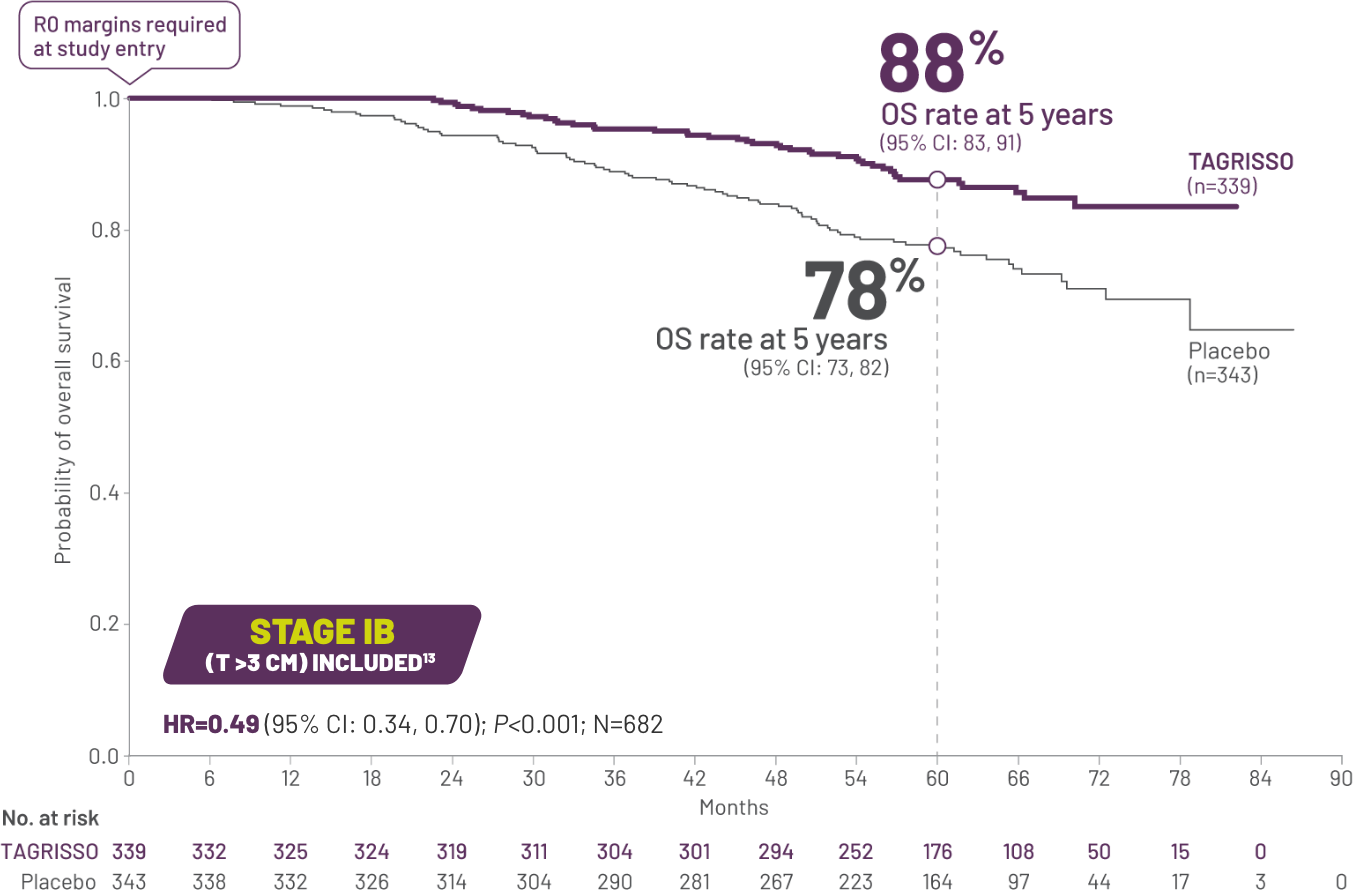





 This product information is intended for US Healthcare Professionals only.