DFS rates in patients with stage IB-IIIA EGFRm NSCLC2
- 2 YEARS 90% TAGRISSO
 55% Placebo
 - 3 YEARS 85% TAGRISSO 44% Placebo
- 4 YEARS 73% TAGRISSO 38% Placebo
INITIAL DFS ANALYSIS: In resected stage IB-IIIA, median DFS was not reached (95% CI: NE, NE) for TAGRISSO vs 27.5 months (95% CI: 22.0, 35.0) for placebo; HR=0.20 (95% CI: 0.15, 0.27); P<0.0001; N=682.1*
UPDATED DFS ANALYSIS
65.8 months (95% CI: 61.7, NC) median DFS for TAGRISSO
and 28.1 months (95% CI: 22.1, 35.0) for placebo
65.8 months (95% CI: 61.7, NC)
median DFS for TAGRISSO and 28.1 months
(95% CI: 22.1, 35.0) for placebo
in resected stage IB-IIIA1‡
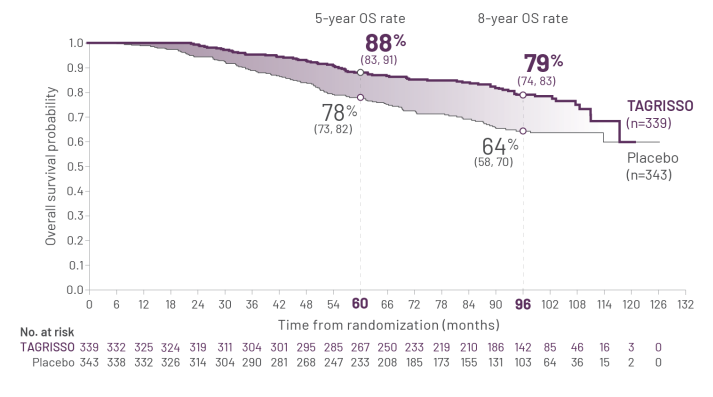
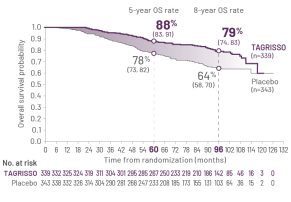
Statistically significant OS
51%
reduced risk of death
vs placebo
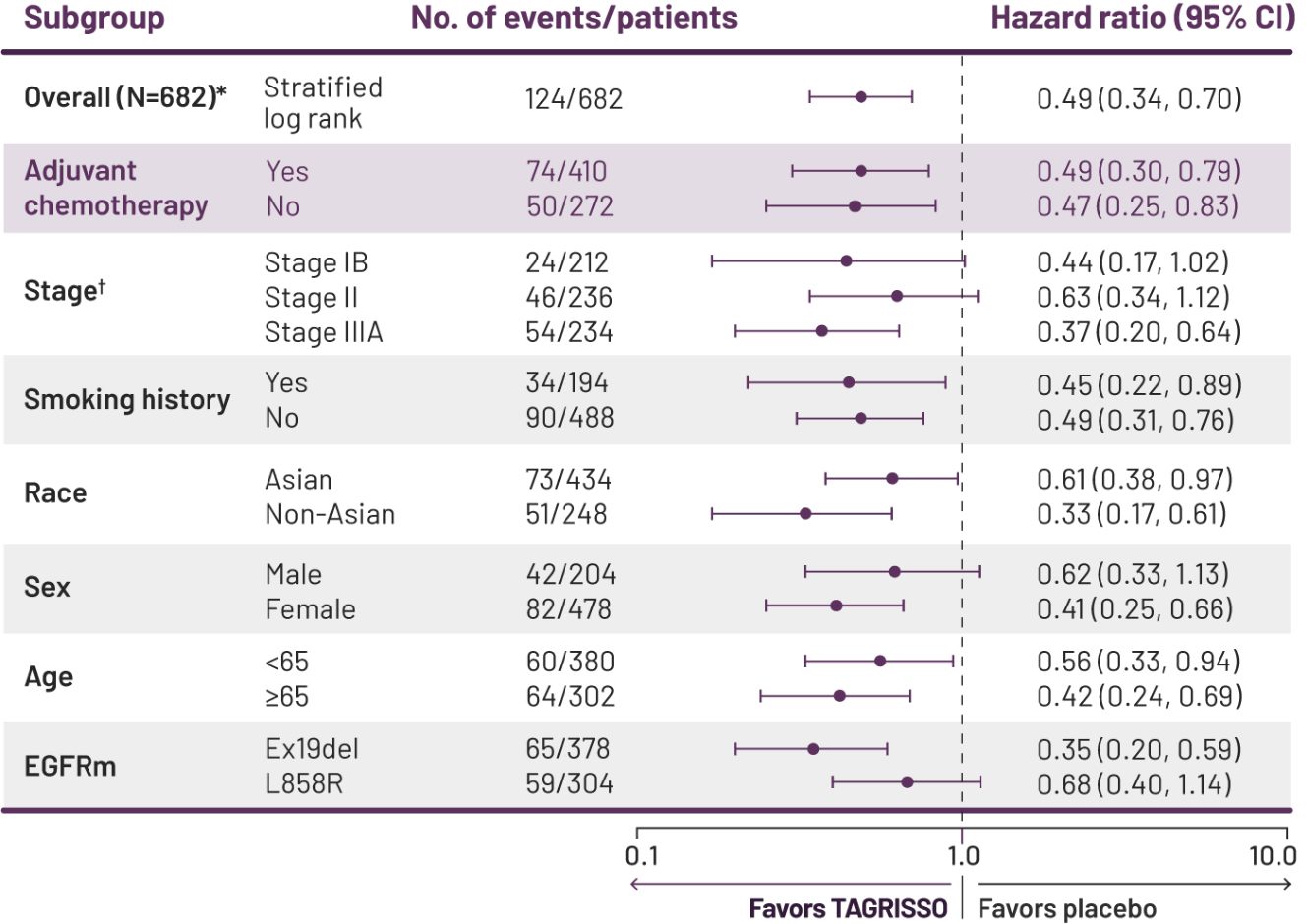
(95% CI: 0.34, 0.70); P<0.0001; N=682
51%


51% reduced risk of death vs placebo1
88% OS rate at 5 years with TAGRISSO
(95% CI: 83, 91)3
DFS rates in patients with stage IB-IIIA EGFRm NSCLC2
55% Placebo 44% Placebo 38% PlaceboOS IN RESECTED STAGE IB-IIIA EGFRm NSCLC:
OS IN RESECTED STAGE II-IIIA EGFRm NSCLC:
OS HR: 0.49 (95% CI: 0.33, 0.73); P=0.0004; n=4701‡¶
Osimertinib (TAGRISSO) is the first and only EGFR TKI with an NCCN Category 1 recommendation for adjuvant treatment following surgical resection in patients with EGFRm (exon 19 deletion, L858R mutation) NSCLC.5#**
#See the NCCN Guidelines for detailed recommendations, including other treatment options.
**Osimertinib is recommended following surgical resection in patients with EGFRm (exon 19 deletion, L858R mutation) NSCLC who received previous adjuvant chemotherapy or are ineligible to receive platinum-based chemotherapy.5
*Secondary endpoint in the ADAURA initial analysis. Primary endpoint in the initial analysis at 2 years was DFS in stage II-IIIA patients. Median DFS was not reached for TAGRISSO (95% CI: 38.8, NE) vs 19.6 months (95% CI: 16.6, 24.5) for placebo (HR=0.17 [95% CI: 0.12, 0.23]; P<0.0001).1,3
†Secondary endpoint in the ADAURA trial with 2 additional years of follow-up. Primary endpoint in the updated analysis was DFS in stage II-IIIA patients; median DFS was 65.8 months for TAGRISSO (95% CI: 54.4, NC) and was 21.9 months (95% CI: 16.6, 27.5) for placebo (HR=0.23 [95% CI: 0.18, 0.30]).2
‡Secondary endpoint in ADAURA.1
§OS maturity was 18% (TAGRISSO; 12%, placebo; 24%).3
||One hundred eighty-four patients in the placebo arm received a subsequent therapy. Of these patients, 88% (n=162) received an EGFR TKI, most frequently TAGRISSO (43%; n=79).3,6
¶OS maturity was 21% (TAGRISSO; 15%, placebo; 27%).3
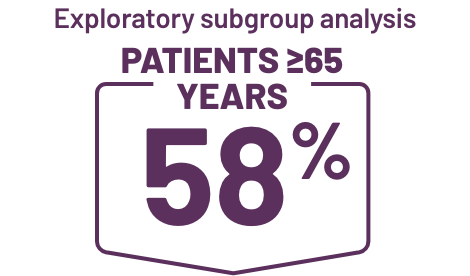
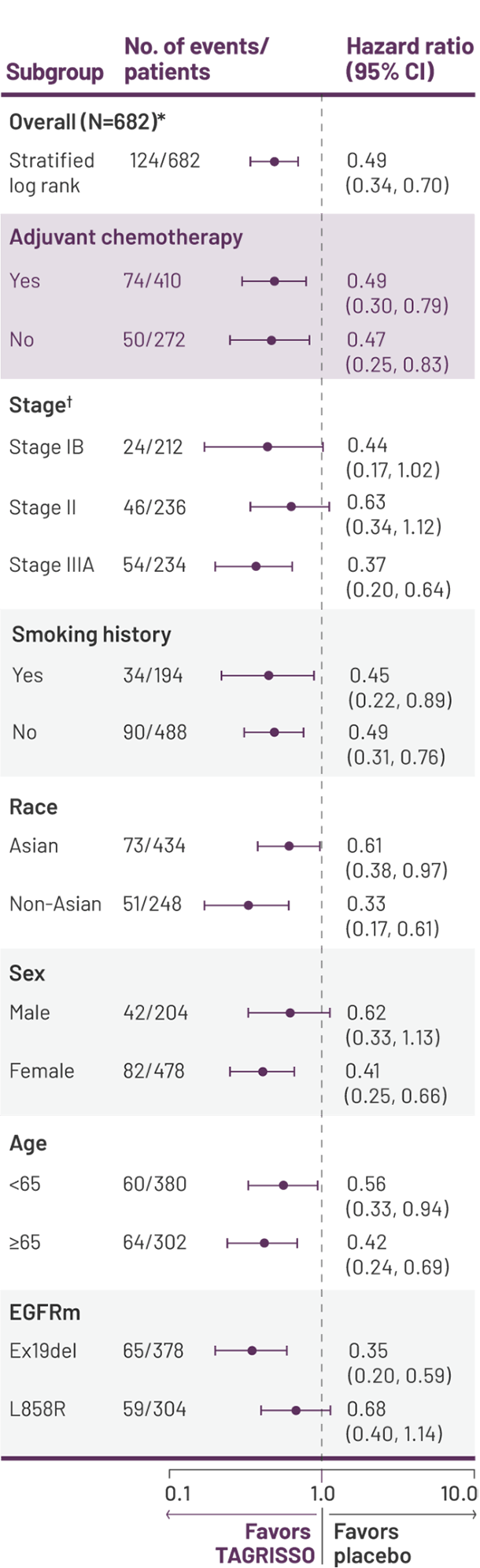
Adjuvant TAGRISSO reduced the risk of death in most prespecified subgroups, including patients 65 years of age or older.6
WITHOUT PRIOR ADJUVANT CHEMOTHERAPYII
In ADAURA, patients without prior adjuvant chemotherapy were treated as follows1||:

HR0.47
(95% CI: 0.25, 0.83)3
OR
Pill image is not actual size.
WITH PRIOR ADJUVANT CHEMOTHERAPY#
In ADAURA, patients with prior adjuvant chemotherapy were treated as follows1||:
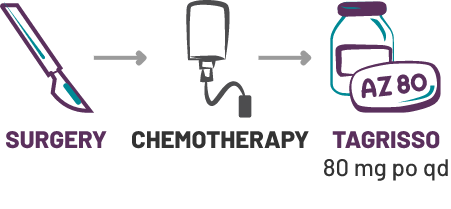
HR0.49
(95% CI: 0.30, 0.79)3
Pill image is not actual size.
Although prior adjuvant chemotherapy use was allowed, it was not required in the ADAURA trial7
PRIOR ADJUVANT CHEMOTHERAPY USE IN ADAURA BY STAGE8
| Characteristic | TAGRISSO | Placebo |
|---|---|---|
| Stage IB | 25% (n=27) | 28% (n=30) |
| Stage II | 70% (n=80) | 73% (n=85) |
| Stage IIIA | 81% (n=95) | 78% (n=92) |
*Stage IB-IIIA population.6
†Based on AJCC 7th edition.3
‡In ADAURA, delivery of adjuvant chemotherapy was allowed, but not mandatory, and was decided by the physician and patient prior to study enrollment. 60% of patients received prior adjuvant chemotherapy (adjuvant TAGRISSO arm: stage IB, 25%; stage II, 70%; stage IIIA, 81%; placebo arm: stage IB, 28%; stage II, 73%; stage IIIA, 78%).7,8
§OS results for overall patient population (completely resected stage IB-IIIA EGFRm NSCLC): median OS was not reached in either arm (HR=0.49 [95% CI: 0.34, 0.70]; P<0.0001).1
IIIn patients who did not receive prior adjuvant chemotherapy in ADAURA, the interval between surgery and adjuvant TAGRISSO was up to 10 weeks.1
¶In the ADAURA trial, patients received adjuvant TAGRISSO for up to 3 years or until disease recurrence or unacceptable toxicity.1
#In patients who received prior adjuvant chemotherapy in ADAURA, the interval between surgery and adjuvant TAGRISSO was up to 26 weeks.1
**TAGRISSO is indicated as adjuvant therapy after tumor resection in adult patients with non-small cell lung cancer (NSCLC) whose tumors have epidermal growth factor receptor (EGFR) exon 19 deletions or exon 21 L858R mutations, as detected by an FDA-approved test.1


76%
reduced risk of CNS recurrence or
death with adjuvant TAGRISSO in a
post hoc
analysis of the primary
endpoint subset (stage II-IIIA) HR=0.24 (95% CI: 0.14, 0.42)
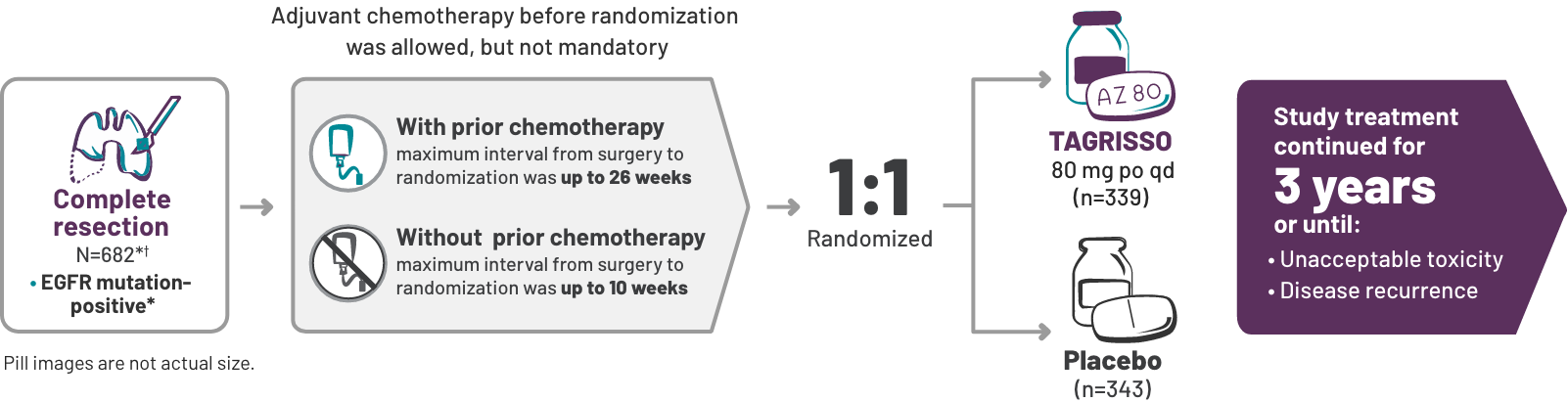
Adjuvant chemotherapy before randomization was allowed, but not mandatory

Adjuvant chemotherapy before randomization was allowed, but not mandatory

With prior chemotherapy maximum interval from surgery to randomization was up to 26 weeks

Without prior chemotherapy maximum interval from surgery to randomization was up to 10 weeks
1:1
Randomized


TAGRISSO
80 mg po qd
(n=339)

Placebo
(Standard of care) (n=343)
Study treatment continued for 3 years or until:
Pill images are not actual size.
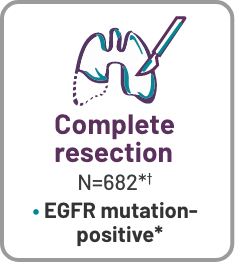
ADAURA included patients with completely resected stage IB-IIIA EGFRm NSCLC without any exclusion criteria on tumor size—tumors >3 cm (T2aN0) were included1,9-13
Primary endpoint: DFS by investigator assessment in patients with stage II-IIIA NSCLC.7
Secondary endpoints: DFS in the overall population (stage IB-IIIA); DFS rate at 2, 3, 4, and 5 years; overall survival (stage II-IIIA and overall population); safety; and health-related QoL.1,4,7
Exploratory endpoints: Assessment of the site or sites of recurrence (including the CNS); time to CNS disease recurrence or death.7
Key inclusion criteria: Patients were required to have a WHO PS of 0/1 and an exon 19 deletion or exon 21 L858R mutation. Patients were required to be ≥18 years old. Brain imaging, if not completed preoperatively, was required. Complete resection with negative margins was required.7,8
Key exclusion criteria: Wedge resection or radiation therapy.8
*Patients with EGFRm NSCLC (exon 19 deletion or exon 21 L858R mutation) with completely resected stage IB, II, and IIIA tumors as defined by AJCC 7th edition were enrolled in ADAURA.1
†Patients were stratified by stage (IB or II or IIIA), EGFR mutation (exon 19 deletion or exon 21 L858R mutation), and race (Asian or non-Asian).1

| Characteristic | TAGRISSO (n=339) |
Placebo (n=343) |
||
|---|---|---|---|---|
| Staging at diagnosis | ||||
| IB | 32% | 32% | ||
| II | 34% | 34% | ||
| IIIA | 35% | 34% | ||
| Received prior adjuvant chemotherapy | ||||
| IB | 25% | 28% | ||
| II | 70% | 73% | ||
| IIIA | 81% | 78% | ||
| Smoking history | 32% | 25% | ||
| Non-Asian | 36% | 36% | ||
| Male | 32% | 28% | ||
| Median age, years (range) | 64 (30-86) | 62 (31-82) | ||
| WHO PS: 0/1 | 64%/36% | 64%/36% | ||
Regardless of their clinicopathologic features -- it's critical to test every eligible patient for EGFR mutations

Not actual patients.
*The NCCN Guidelines for NSCLC provide recommendations for certain individual biomarkers that should be tested and recommend testing techniques, but do not endorse any specific commercially available biomarker assays or commercial laboratories.5
†Osimertinib is recommended following surgical resection in patients with EGFRm (exon 19 deletion, L858R mutation) NSCLC who received previous adjuvant chemotherapy or are ineligible to receive platinum-based chemotherapy.5

TEST
all eligible patients to
determine if EGFR
is the driver of disease5

KNOW
mutation status to help
inform treatment
decisions

TREAT
eligible patients with resectable EGFRm NSCLC with adjuvant TAGRISSO for
3 years1‡
Pill image is not actual size.

all eligible patients to
determine if EGFR is
the driver of disease

mutation status to help
inform treatment decisions

eligible patients with resectable
EGFRm NSCLC with adjuvant
TAGRISSO for 3 years1‡
Pill image is not actual size.
‡Or until disease recurrence or unacceptable toxicity.1
ILD/Pneumonitis with TAGRISSO in combination with Pemetrexed and Platinum-based Chemotherapy:
ILD/Pneumonitis Following Definitive Platinum-based Chemoradiation Therapy (CRT):
For patients receiving TAGRISSO who have not received recent definitive platinum-based CRT, withhold TAGRISSO and promptly investigate for ILD in patients who present with worsening of respiratory symptoms which may be indicative of ILD (e.g., dyspnea, cough, and fever). Permanently discontinue TAGRISSO if ILD/pneumonitis is confirmed. For patients who have received recent definitive platinum-based CRT with Grade 1 ILD/pneumonitis, continue TAGRISSO or interrupt and restart, as appropriate. Permanently discontinue TAGRISSO in patients diagnosed with Grade ≥2 ILD/pneumonitis
Please see complete Prescribing Information, including Patient Information for TAGRISSO.
You may report side effects related to AstraZeneca products  .
.
CI, confidence interval; DFS, disease-free survival; EGFR, epidermal growth factor receptor; EGFRm, epidermal growth factor receptor mutation; HR, hazard ratio; L858R, exon 21 leucine 858 arginine substitution; NCCN, National Comprehensive Cancer Network® (NCCN®); NE, not estimable; NSCLC, non-small cell lung cancer; OS, overall survival; TKI, tyrosine kinase inhibitor.
References: 1. TAGRISSO [package insert]. Wilmington, DE: AstraZeneca Pharmaceuticals LP; 2024. 2. Referenced with permission from the NCCN Clinical Practice Guidelines in Oncology (NCCN Guidelines®) for Non-Small Cell Lung Cancer V.5.2026. © National Comprehensive Cancer Network, Inc. 2026. All rights reserved. Accessed March 13, 2026. To view the most recent and complete version of the guideline, go online to NCCN.org. NCCN makes no warranties of any kind whatsoever regarding their content, use or application and disclaims any responsibility for their application or use in any way. 3. Tsuboi M, Herbst RS, John T, et al; ADAURA Investigators. Overall survival with osimertinib in resected EGFR-mutated NSCLC. N Engl J Med. 2023;389(2):137-147.ILD/Pneumonitis with TAGRISSO in combination with Pemetrexed and Platinum-based Chemotherapy:
ILD/Pneumonitis Following Definitive Platinum-based Chemoradiation Therapy (CRT):
For patients receiving TAGRISSO who have not received recent definitive platinum-based CRT, withhold TAGRISSO and promptly investigate for ILD in patients who present with worsening of respiratory symptoms which may be indicative of ILD (e.g., dyspnea, cough, and fever). Permanently discontinue TAGRISSO if ILD/pneumonitis is confirmed. For patients who have received recent definitive platinum-based CRT with Grade 1 ILD/pneumonitis, continue TAGRISSO or interrupt and restart, as appropriate. Permanently discontinue TAGRISSO in patients diagnosed with Grade ≥2 ILD/pneumonitis
Please see complete Prescribing Information, including Patient Information for TAGRISSO.
You may report side effects related to AstraZeneca products .
CI, confidence interval; DFS, disease-free survival; EGFR, epidermal growth factor receptor; EGFRm, epidermal growth factor receptor mutation; HR, hazard ratio; L858R, exon 21 leucine 858 arginine substitution; NCCN, National Comprehensive Cancer Network® (NCCN®); NE, not estimable; NSCLC, non-small cell lung cancer; OS, overall survival; TKI, tyrosine kinase inhibitor.
References: 1. TAGRISSO [package insert]. Wilmington, DE: AstraZeneca Pharmaceuticals LP; 2024. 2. Referenced with permission from the NCCN Clinical Practice Guidelines in Oncology (NCCN Guidelines®) for Non-Small Cell Lung Cancer V.5.2026. © National Comprehensive Cancer Network, Inc. 2026. All rights reserved. Accessed March 13, 2026. To view the most recent and complete version of the guideline, go online to NCCN.org. NCCN makes no warranties of any kind whatsoever regarding their content, use or application and disclaims any responsibility for their application or use in any way. 3. Tsuboi M, Herbst RS, John T, et al; ADAURA Investigators. Overall survival with osimertinib in resected EGFR-mutated NSCLC. N Engl J Med. 2023;389(2):137-147.







 This product information is intended for US Healthcare Professionals only.