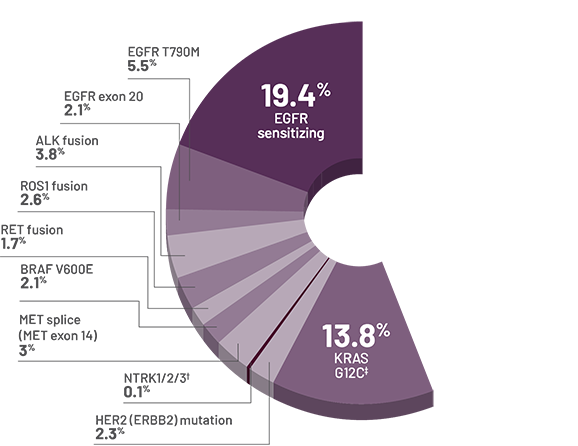
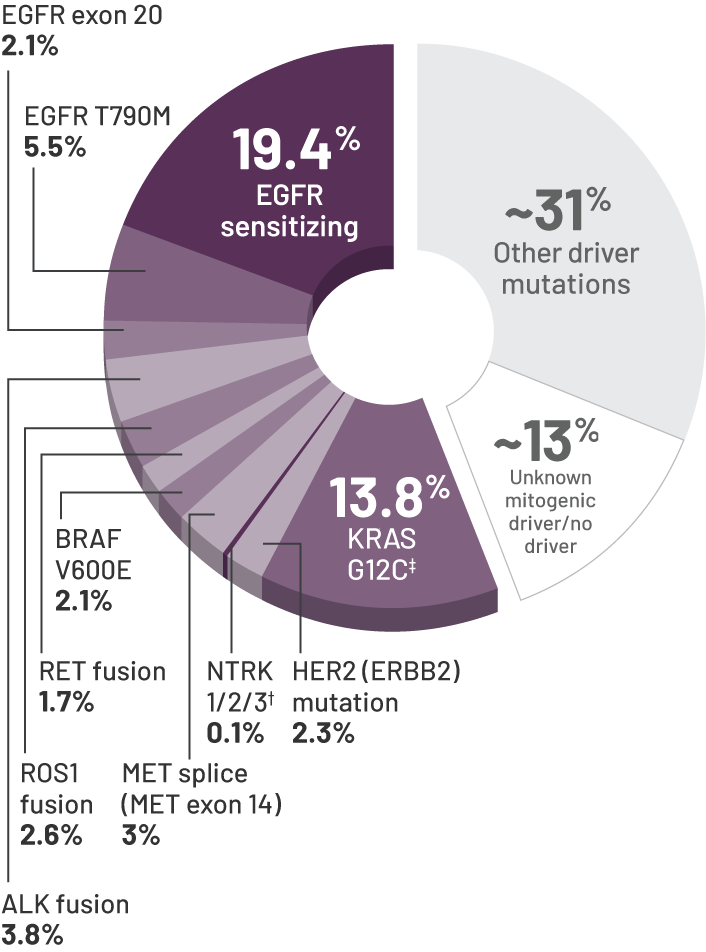
In metastatic NSCLC More than 50% of your patients with mNSCLC of adenocarcinoma histology may have an actionable mutation*
MUTATIONS IN PATIENTS WITH mNSCLC OF ADENOCARCINOMA HISTOLOGY1-3*

DON’T MISS A MUTATION
It is guideline recommended to test every eligible patient with mNSCLC to find if a driver of the disease exists, if clinically feasible4

Actionable mutations

Other driver mutations

Unknown mitogenic driver/no driver


DON’T MISS A MUTATION
It is guideline recommended to test every eligible patient with mNSCLC to find if a driver of the disease exists, if clinically feasible4
Actionable mutations
Other driver mutations
Unknown mitogenic driver/no driver
 National Comprehensive Cancer Network® (NCCN®):
Test eligible patients with mNSCLC for targetable genetic alterations to both identify potentially efficacious targeted therapies and avoid therapies unlikely to provide clinical benefit.4
While most patients had at least one biomarker test performed for ALK, BRAF, EGFR, ROS1, or PD-L1, only about 60% of patients with nonsquamous histology had their EGFR test results prior to initiation of first-line therapy.5§

While most patients had at least one biomarker test performed for ALK, BRAF, EGFR, ROS1, or PD-L1, only about 60% of patients with nonsquamous histology had their EGFR test results prior to initiation of first-line therapy.5§
*Jordan et al (2017) prospectively analyzed a total of 915 tumors from 860 patients with recurrent or metastatic lung adenocarcinoma for mutations in >300 cancer-associated genes using the Memorial Sloan Kettering-Integrated Mutation Profiling of Actionable Cancer Targets (MSK-IMPACT) assay, a hybridization capture-based, next-generation sequencing platform.1
†Gatalica et al (2019) reviewed a large cohort of solid malignancies profiled by a commercial laboratory that were tested for NTRK gene fusions and other pathogenic/targetable genomic and protein alterations. Patients’ stage of disease was not disclosed. 4073 patients in the study had non-small cell lung carcinomas of adenocarcinoma histology, of which 4 patients had an NTRK fusion.2
‡Nassar et al (2021) extracted data from the registry of the American Association for Cancer Research Project Genomics Evidence Neoplasia Information Exchange (GENIE) version 8.0 to study the distribution of KRAS mutations in 32,138 patients with cancer across race and sex. KRAS mutations were identified in 1867 samples, most frequently in patients with NSCLC (1443 of 10,444). 76.3% of patients with NSCLC had lung adenocarcinoma histology. Patients’ stage of disease was not disclosed.3,6
§Based on a retrospective observational chart review study of 3474 adult patients with mNSCLC between April 2018 and March 2020. Study assessed for 5 biomarkers: EGFR, ALK, ROS1, BRAF, and PD-L1. 81.2% (2820/3474) had mNSCLC of nonsquamous histology. In patients with nonsquamous histology, 63% were tested before initiation of 1L therapy for EGFR, 63% for ALK, 73% for PD-L1, 61% for ROS1, 47% for BRAF, and 39% had all 5 biomarkers tested. Data were collected from community-based oncology practices within The US Oncology Network.5
Don’t assume mutation status based on smoking history, race, or gender7*
 History of
 smoking
 Non-Asian
 Male
Male*Data from Flatiron Health EHR-derived database. Included data from patients treated between December 18, 2010 and January 31, 2023.7
†Calculations are based on those who specified race, and excluded the 539 patients in the study for whom race was not specified.7
‡For exon 19 deletions or exon 21 L858R mutations.
Some patients with EGFRm mNSCLC may suffer from poorer prognoses
COMMON SITES OF METASTASES ACROSS NSCLC INCLUDE12:
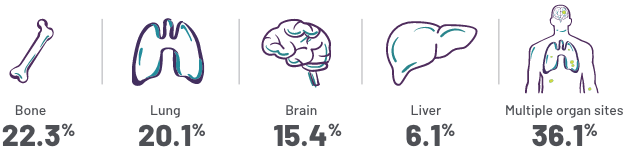
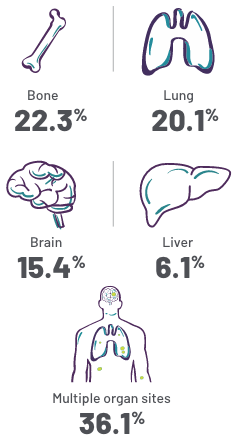
- A population study identified common metastatic sites in 54,697 patients with NSCLC and SCLC from the SEER database*
In EGFRm NSCLC, the prognosis for patients with brain metastases remains poor

Patients with EGFRm NSCLC have approximately twice the risk of CNS metastases compared with patients with EGFR wild-type disease (OR=1.99)13†
- Incidence of CNS metastases nearly doubles after 3 years as disease progresses in EGFRm mNSCLC (~24% of
patients at diagnosis; ~38% of patients at 2 years; ~47% of patients at 3 years)14‡
*Based on 54,697 patients in the SEER database diagnosed between 2010 and 2014 with primary metastatic NSCLC or SCLC and definite lung, liver, brain, and bone metastases. Information about adrenal glands and other uncommon sites of metastases was unavailable.12
†Based on meta-analysis that examined the incidence of brain metastases in EGFRm or EGFR wild-type NSCLC. 8152 patients were included from 22 multinational studies. 16 studies included patients with stage IV disease. 2664 patients had an EGFR mutation.13
‡Based on a retrospective US study that evaluated the frequency of brain metastases in 381 patients with advanced NSCLC. 86 of those patients had an EGFR mutation.14
EGFR mutations are common in mNSCLC

Approximately 1 in 4 patients with metastatic NSCLC may have an EGFR mutation1*
- In EGFRm mNSCLC of adenocarcinoma histology, exon 19 deletions and exon 21 L858R mutations are the most common
Patients with exon 21 L858R mutations may have poorer outcomes than patients with exon 19 deletion mutations10,11†
- In patients treated with 1L EGFR TKIs, PFS was longer in patients who had exon 19 deletions
than in those who had exon 21 L858R mutations; HR=0.76 (95% CI: 0.69, 0.92); P=0.00611‡
*Jordan et al (2017) prospectively analyzed a total of 915 tumors from 860 patients with recurrent or metastatic lung adenocarcinoma for mutations in >300 cancer-associated genes using the Memorial Sloan Kettering-Integrated Mutation Profiling of Actionable Cancer Targets (MSK-IMPACT) assay, a hybridization capture-based, next-generation sequencing platform.1
†Koyama et al (2017) retrospectively analyzed the medical records of 74 patients with stage IIIB or IV NSCLC harboring common EGFR mutations, either exon 19 deletions (n=36) or L858R mutations (n=38), who were treated with gefitinib (250 mg daily) or erlotinib (150 mg daily) from February 2008 to April 2015 at a single center in Japan. Patients with Ex19del mutations experienced significant PFS benefit compared with patients who had L858R mutations; HR=0.569 (95% CI: 0.339, 0.956); P=0.031.10
‡Sheng et al (2016) conducted a meta-analysis of 26 randomized clinical trials that included 4835 patients; among them, 1710 patients with exon 19 deletions and 1271 patients with exon 21 L858R mutations. 17 trials were performed in first-line settings, and 9 trials in mix-line settings. Among the 26 studies, 8 first-line trials investigated efficacy of EGFR TKIs (3 gefitinib, 3 erlotinib, and 2 afatinib) vs chemotherapy on PFS and OS.11
Sequential IO followed by EGFR TKI monotherapy could harm patients with EGFRm mNSCLC*
Immunotherapy (IO) is not an appropriate first-line choice in patients with certain EGFR mutations†

Not sequentially safe
Treatment with certain EGFR TKI monotherapy after IO may increase risk of toxicity15-20*
Not indicated
First-line indications for IO exclude patients with EGFR mutations in mNSCLC21-25
Not targeted therapy
IO does not target the driver of disease
Not effective
In a study of first-line IO in treatment-naïve patients with EGFRm NSCLC, ORR was 0%26‡
- Fourteen large and robust first-line IO trials excluded patients with EGFRm NSCLC27-40§||
*Based on 6 studies of 3867 patients with NSCLC and EGFR sensitizing mutations. Of the 3867 patients, 395 were treated with immunotherapy followed by EGFR TKIs. Adverse reactions, including ILD, were observed following the sequential use of IO followed by EGFR-TKI therapy in patients who had EGFR mutations. Increased risk of toxicity was primarily observed with osimertinib.15-20
†Not applicable to patients with a KRAS G12C or ERBB2 (HER2) mutation without another actionable mutation or patients with certain EGFR exon 20 insertion mutations.41-44
‡Phase 2, single-arm study of pembrolizumab in patients with advanced EGFRm NSCLC. 82% of the enrolled patients were treatment naïve. The trial was stopped due to lack of efficacy after 11 of the 25 planned patients were enrolled. No responses were observed in 10 of the 11 patients treated, even in patients with PD-L1 expression ≥50%. The patient who did have a response was revealed to be EGFR wild-type upon repeat analysis.26
§KEYNOTE-024, KEYNOTE-042, KEYNOTE-021 Cohort G, KEYNOTE-189, CHECKMATE 026, CHECKMATE 227, CHECKMATE 9LA, IMpower110, IMpower130, IMpower132, IMpower150, POSEIDON, EMPOWER-Lung 1, and EMPOWER-Lung 3 did not allow patients with metastatic NSCLC with EGFR mutations. In the IMpower130 and IMpower150 trials, patients with EGFRm NSCLC were allowed only after progression on EGFR-TKI therapy or intolerance to EGFR-TKI treatment. There are no head-to-head trials comparing IO and EGFR TKIs in patients with EGFR mutation-positive mNSCLC.27-40
||Excluded patients with mNSCLC who had EGFR sensitizing mutations (exon 19 deletions and exon 21 L858R mutations).27-40
PD-L1 positive may not mean EGFRm negative
OVERLAP OF EGFR MUTATIONS AND PD-L1 EXPRESSION45-49¶
Up to 70%
of patients with EGFRm mNSCLC also express PD-L1 at levels >1%
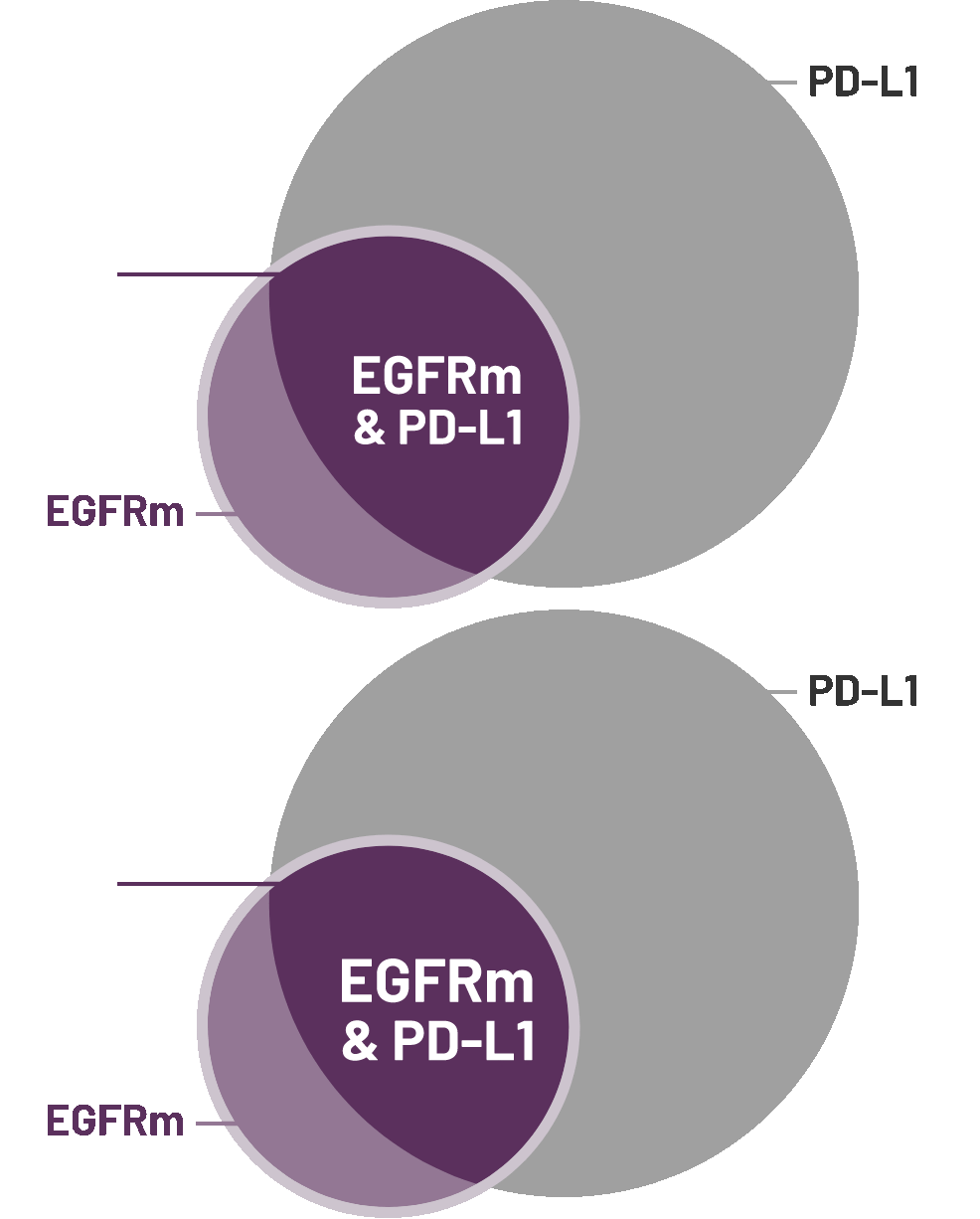
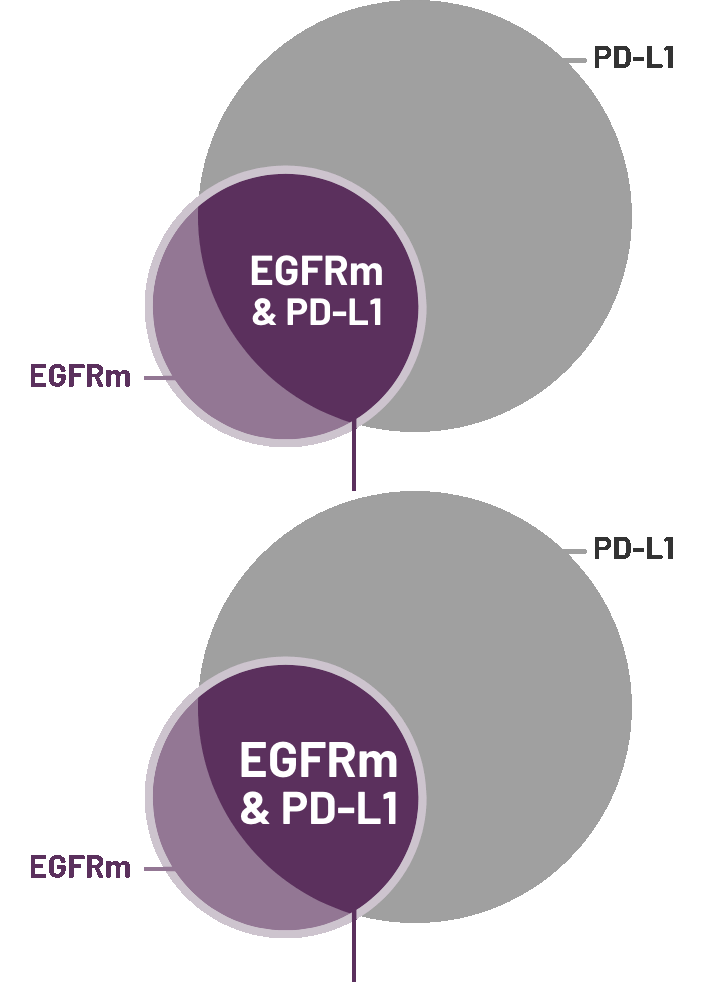
Up to 70%
of patients with EGFRm NSCLC also express PD-L1 at levels >1%
TEST FIRST: Patients with mNSCLC and PD-L1 expression levels ≥1% should be confirmed negative for certain driver mutations, including EGFR exon 19 deletions and exon 21 L858R mutations, before they are treated with immune checkpoint inhibitors, if clinically feasible.4#
TARGETED THERAPY TAKES PRECEDENCE:
#The NCCN Clinical Practice Guidelines in Oncology (NCCN Guidelines®) for NSCLC provide recommendations for certain individual biomarkers that should be tested and recommend testing techniques, but do not endorse any specific commercially available biomarker assays or commercial laboratories.4
**Not applicable to patients with a KRAS G12C or ERBB2 (HER2) mutation without another actionable mutation.41-44
¶Mazieres et al (2019) was a multicenter, international, retrospective study of 551 patients receiving ICI monotherapy for advanced NSCLC with at least one oncogenic driver alteration. 125 patients had an EGFR mutation.45 D'Incecco et al (2015) was a multicenter, retrospective, Italian study that assessed PD-L1 expression in 125 patients with mNSCLC and EGFR mutations, ALK translocations, or KRAS mutations. 56 patients had an EGFR mutation.47 Dietel et al (2019) was a multicenter, international, retrospective study that examined PD-L1 expression in 2368 tumor samples with histologically confirmed stage IIIB/IV primary NSCLC as classified by AJCC 7th edition. 448 patients had an EGFR mutation.48 Brown et al (2020) analyzed PD-L1 expression in 231 samples of untreated EGFR-mutated advanced NSCLC.49
††EGFR sensitizing mutations (exon 19 deletions and exon 21 L858R mutations).4
Use a comprehensive testing approach to identify every eligible patient with actionable mutations
For eligible patients with metastatic NSCLC4
- Combinations of tissue and plasma testing, either concurrently or in sequence, are acceptable*
- Concurrent testing can improve time to test results and should be considered in the appropriate clinical situation
*Negative results by one method suggest the use of a complementary method. Treatment is guided by available results and, if unknown, these patients are treated as though they do not have driver oncogenes.4


Use liquid biopsy to overcome the barriers of tissue testing50,51

Reduce turnaround time
Liquid biopsy offers results in roughly half the time—9 days vs 15 days for tissue†
Do more when retrieving tissue is not feasible
~23% were found to have actionable mutations with liquid biopsy‡§
Address cases of tissue QNS
~28% were found to have actionable mutations with liquid biopsy‡||
Find more actionable mutations
In a clinical study, detection of actionable mutations increased from 20.5% to 35.8% when liquid biopsy was added to tissue testing‡¶
Positive liquid biopsy results are sufficient to inform treatment selection.
Negative liquid biopsy results should be reflexed to tissue biopsy.52
†Multicenter North American study of 282 patients with stage IIIB or stage IV NSCLC using next-generation sequencing as the testing platform. ~98% of patients had stage IV disease. Turnaround time is for next-generation sequencing.50
‡From a single-center, prospective cohort study of 323 patients with histologically confirmed stage IV NSCLC who had plasma testing as part of routine clinical management.51
§5 out of 22 (23%) patients whose tissue was not able to be retrieved for biopsy were found to have actionable mutations through liquid biopsy only.51
||22 out of the 79 (28%) patients who did not have sufficient quality/quantity of DNA were found to have targetable mutations via liquid biopsy.51
¶Patients had plasma testing as part of routine clinical management.51
Per NCCN Guidelines: Test, Confirm, Treat4



eligible patients with mNSCLC for targetable genetic alterations to both identify potentially efficacious targeted therapies and avoid therapies unlikely to provide clinical benefit

CONFIRM
that patients with mNSCLC and PD-L1 expression levels ≥1% are confirmed negative for certain driver mutations, including EGFR (exon 19 deletion and exon 21 L858R), ALK, ROS1, BRAF, NTRK 1/2/3, RET, and MET exon 14 skipping mutations, before they are treated with immune checkpoint inhibitors*†

TREAT
EGFRm mNSCLC patients with an EGFR TKI. Treatment with targeted therapy should take precedence over treatment with IO in patients with mNSCLC and certain oncogenic drivers in a first-line setting, even when PD-L1 expression levels are elevated
Pill image is not actual size.
*The NCCN Guidelines® for NSCLC provide recommendations for certain individual biomarkers that should be tested and recommend testing techniques, but do not endorse any specific commercially available biomarker assays or commercial laboratories.4
†Not applicable to patients with a KRAS G12C or ERBB2 (HER2) mutation without another actionable mutation or patients with certain EGFR exon 20 insertion mutations.41-44



 This product information is intended for US Healthcare Professionals only.
IMPORTANT SAFETY INFORMATION
- There are no contraindications for TAGRISSO
- TAGRISSO can cause severe and fatal interstitial lung disease (ILD)/pneumonitis. ILD/pneumonitis occurred in 4% of the 1813 patients treated with TAGRISSO monotherapy who had not received recent definitive chemoradiation therapy; 0.4% of cases were fatal
- In the FLAURA2 study, ILD/pneumonitis occurred in 3.3% of the 276 patients who received TAGRISSO in combination with pemetrexed and platinum-based chemotherapy; 0.4% of cases were fatal
- In the LAURA study, following definitive platinum-based CRT, ILD/pneumonitis including radiation pneumonitis, occurred in 80 of the 143 patients (56%) who received TAGRISSO monotherapy and 28 of the 73 patients (38%) who received placebo. There was one fatal case (0.7%), 3.5% Grade 3, 34% Grade 2, and 18% Grade 1 adverse reactions of ILD/pneumonitis in TAGRISSO-treated patients. For TAGRISSO-treated patients, ILD/pneumonitis led to permanent discontinuation of TAGRISSO in 7% of patients and dosage interruptions of TAGRISSO in 35% of patients. Among the 46 patients who were rechallenged with TAGRISSO, 11% had recurrence of ILD/pneumonitis. In the 80 TAGRISSO-treated patients, ILD/pneumonitis resolved in 40%, resolved with sequelae in 1.3%, were resolving in 16%, did not resolve in 41%, and resulted in death in 1.3%
- TAGRISSO can cause heart rate-corrected QT (QTc) interval prolongation. Of the 1813 TAGRISSO monotherapy-treated patients in clinical trials, 1.1% were found to have a QTc >500 msec, and 4.3% of patients had an increase from baseline QTc >60 msec. Of the 276 patients treated with TAGRISSO in combination with pemetrexed and platinum-based chemotherapy in the FLAURA2 study, 1.8% were found to have a QTc >500 msec, and 10.5% of patients had an increase from baseline QTc >60 msec. No QTc-related arrhythmias were reported. Clinical trials of TAGRISSO did not enroll patients with baseline QTc of >470 msec. Conduct periodic monitoring with ECGs and electrolytes in patients with congenital long QTc syndrome, congestive heart failure, electrolyte abnormalities, or those who are taking medications known to prolong the QTc interval. Permanently discontinue TAGRISSO in patients who develop QTc interval prolongation with signs/symptoms of life-threatening arrhythmia
- TAGRISSO can cause cardiomyopathy, including cardiac failure, chronic cardiac failure, congestive heart failure, pulmonary edema or decreased ejection fraction. Cardiomyopathy occurred in 3.8% of the 1813 TAGRISSO-treated patients; 0.1% of cardiomyopathy cases were fatal. In the FLAURA2 study, cardiomyopathy occurred in 9% of the 276 patients who received TAGRISSO in combination with pemetrexed and platinum-based chemotherapy; 1.1% of cardiomyopathy cases were fatal. A decline in left ventricular ejection fraction (LVEF) ≥10% from baseline and to <50% LVEF occurred in 4.2% of 1557 patients who had baseline and at least one follow-up LVEF assessment. In the ADAURA study, 1.5% (5/325) of TAGRISSO-treated patients experienced LVEF decreases ≥10% from baseline and a drop to <50%. In the LAURA study, following platinum-based CRT, 3% (4/135) of TAGRISSO-treated patients and no placebo-treated patients experienced LVEF decreases ≥10% and a drop to <50%. In the FLAURA2 study, 8% (21/262) of patients treated with TAGRISSO in combination with pemetrexed and platinum-based chemotherapy, who had baseline and at least one follow-up LVEF assessment, experienced LVEF decreases ≥10% and a drop to <50%. For patients receiving TAGRISSO monotherapy, conduct cardiac monitoring in patients with cardiac risk factors, including assessment of LVEF at baseline and during treatment. For patients receiving TAGRISSO in combination with pemetrexed and platinum-based chemotherapy, conduct cardiac monitoring in all patients, including assessment of LVEF at baseline and during treatment. Assess LVEF in patients who develop relevant cardiac signs or symptoms during treatment. For symptomatic congestive heart failure, permanently discontinue TAGRISSO
- Keratitis was reported in 0.6% of 1813 patients treated with TAGRISSO monotherapy in clinical trials. Promptly refer patients with signs and symptoms suggestive of keratitis (such as eye inflammation, lacrimation, light sensitivity, blurred vision, eye pain and/or red eye) to an ophthalmologist
- Postmarketing cases consistent with erythema multiforme major (EMM), Stevens-Johnson syndrome (SJS) and toxic epidermal necrolysis (TEN) have been reported in patients receiving TAGRISSO. Withhold TAGRISSO if EMM, SJS, or TEN is suspected and permanently discontinue if confirmed
- Postmarketing cases of cutaneous vasculitis including leukocytoclastic vasculitis, urticarial vasculitis, and IgA vasculitis have been reported in patients receiving TAGRISSO. Withhold TAGRISSO if cutaneous vasculitis is suspected, evaluate for systemic involvement, and consider dermatology consultation. If no other etiology can be identified, consider permanent discontinuation of TAGRISSO based on severity
- Aplastic anemia has been reported in TAGRISSO-treated patients in clinical trials (0.06% of 1813) and postmarketing. Some cases had a fatal outcome. Inform patients of the signs and symptoms of aplastic anemia including but not limited to, new or persistent fevers, bruising, bleeding, and pallor. If aplastic anemia is suspected, withhold TAGRISSO and obtain a hematology consultation. If aplastic anemia is confirmed, permanently discontinue TAGRISSO. Perform complete blood count with differential before starting TAGRISSO, periodically throughout treatment, and more frequently if indicated
- Verify pregnancy status of females of reproductive potential prior to initiating TAGRISSO. Advise pregnant women of the potential risk to a fetus. Advise females of reproductive potential to use effective contraception during treatment with TAGRISSO and for 6 weeks after the last dose. Advise males with female partners of reproductive potential to use effective contraception for 4 months after the last dose
- Because of the potential for serious adverse reactions in breastfed infants from TAGRISSO, women should not breastfeed during treatment with TAGRISSO and for 2 weeks after the last dose
- Most common (≥20%) adverse reactions, including laboratory abnormalities, were:
- TAGRISSO monotherapy: leukopenia, lymphopenia, thrombocytopenia, anemia, diarrhea, rash, musculoskeletal pain, neutropenia, nail toxicity, dry skin, stomatitis, and fatigue
- TAGRISSO monotherapy following platinum-based chemoradiation therapy: lymphopenia, leukopenia, ILD/pneumonitis, thrombocytopenia, neutropenia, rash, diarrhea, nail toxicity, musculoskeletal pain, cough and COVID-19
- TAGRISSO in combination with pemetrexed and platinum-based chemotherapy: leukopenia, thrombocytopenia, neutropenia, lymphopenia, rash, diarrhea, stomatitis, nail toxicity, dry skin, and increased blood creatinine
ILD/Pneumonitis with TAGRISSO in combination with Pemetrexed and Platinum-based Chemotherapy:
ILD/Pneumonitis Following Definitive Platinum-based Chemoradiation Therapy (CRT):
For patients receiving TAGRISSO who have not received recent definitive platinum-based CRT, withhold TAGRISSO and promptly investigate for ILD in patients who present with worsening of respiratory symptoms which may be indicative of ILD (e.g., dyspnea, cough, and fever). Permanently discontinue TAGRISSO if ILD/pneumonitis is confirmed. For patients who have received recent definitive platinum-based CRT with Grade 1 ILD/pneumonitis, continue TAGRISSO or interrupt and restart, as appropriate. Permanently discontinue TAGRISSO in patients diagnosed with Grade ≥2 ILD/pneumonitis
INDICATIONS
- TAGRISSO is indicated as adjuvant therapy after tumor resection in adult patients with non-small cell lung cancer (NSCLC) whose tumors have epidermal growth factor receptor (EGFR) exon 19 deletions or exon 21 L858R mutations, as detected by an FDA-approved test
- TAGRISSO is indicated for the treatment of adult patients with locally advanced, unresectable (stage III) NSCLC whose disease has not progressed during or following concurrent or sequential platinum-based chemoradiation therapy and whose tumors have epidermal growth factor receptor (EGFR) exon 19 deletions or exon 21 L858R mutations, as detected by an FDA-approved test
- TAGRISSO is indicated for the first-line treatment of adult patients with metastatic non-small cell lung cancer (NSCLC) whose tumors have epidermal growth factor receptor (EGFR) exon 19 deletions or exon 21 L858R mutations, as detected by an FDA-approved test
- TAGRISSO is indicated in combination with pemetrexed and platinum-based chemotherapy, for the first-line treatment of adult patients with locally advanced or metastatic NSCLC whose tumors have epidermal growth factor receptor (EGFR) exon 19 deletions or exon 21 L858R mutations, as detected by an FDA-approved test
- TAGRISSO is indicated for the treatment of adult patients with metastatic epidermal growth factor receptor (EGFR) T790M mutation-positive NSCLC, as detected by an FDA-approved test, whose disease has progressed on or after EGFR tyrosine kinase inhibitor (TKI) therapy
Please see complete Prescribing Information, including Patient Information for TAGRISSO.
You may report side effects related to AstraZeneca products  .
.
https://www.astrazeneca.com/media-centre/press-releases/2015/TAGRISSO-AZD9291-approved-by-the-US-FDA-for-patients-with-EGFR-T790M-mutation-positive-metastatic-non-small-cell-lung-cancer-13112015.html. Published November 13, 2015. Accessed September 10, 2020. 3. FDA website. FDA approves osimertinib for first-line treatment of metastatic NSCLC with most common EGFR mutations. https://www.fda.gov/drugs/resources-information-approved-drugs/fda-approves-osimertinib-first-line-treatment-metastatic-nsclc-most-common-egfr-mutations. Published April 19, 2018. Accessed October 13, 2020. 4. FDA website. FDA approves osimertinib as adjuvant therapy for non-small cell lung cancer with EGFR mutations. https://www.fda.gov/drugs/resources-information-approved-drugs/fda-approves-osimertinib-adjuvant-therapy-non-small-cell-lung-cancer-egfr-mutations. Published December 18, 2020. Accessed August 11, 2021. 5. Tagrisso with the addition of chemotherapy approved in the US for patients with EGFR-mutated advanced lung cancer [press release]. AstraZeneca Media Centre; February 16, 2024. 6. AstraZeneca Media Centre. LAURA press release. https://www.astrazeneca.com/media-centre/press-releases/2024/tagrisso-us-approval-in-unresectable-lung-cancer.html. Published September 26, 2024. Accessed September 26, 2024. 7. Data on File. US-106658. AstraZeneca Pharmaceuticals LP. 8. Referenced with permission from the NCCN Clinical Practice Guidelines in Oncology (NCCN Guidelines®) for Non-Small Cell Lung Cancer V.5.2026. © National Comprehensive Cancer Network, Inc. 2026. All rights reserved. Accessed March 13, 2026. To view the most recent and complete version of the guideline, go online to NCCN.org. NCCN makes no warranties of any kind whatsoever regarding their content, use or application and disclaims any responsibility for their application or use in any way. 9. AstraZeneca Media Centre. AURA3 press release. https://www.astrazeneca.com/media-centre/press-releases/2017/tagrisso-osimertinib-receives-us-fda-full-approval-31032017.html. Published March 31, 2017. Accessed September 10, 2020.
CI, confidence interval; DFS, disease-free survival; EGFR, epidermal growth factor receptor; EGFRm, epidermal growth factor receptor mutation; HR, hazard ratio; L858R, exon 21 leucine 858 arginine substitution; NCCN, National Comprehensive Cancer Network® (NCCN®); NE, not estimable; NSCLC, non-small cell lung cancer; OS, overall survival; TKI, tyrosine kinase inhibitor.
References: 1. TAGRISSO [package insert]. Wilmington, DE: AstraZeneca Pharmaceuticals LP; 2024. 2. Referenced with permission from the NCCN Clinical Practice Guidelines in Oncology (NCCN Guidelines®) for Non-Small Cell Lung Cancer V.5.2026. © National Comprehensive Cancer Network, Inc. 2026. All rights reserved. Accessed March 13, 2026. To view the most recent and complete version of the guideline, go online to NCCN.org. NCCN makes no warranties of any kind whatsoever regarding their content, use or application and disclaims any responsibility for their application or use in any way. 3. Tsuboi M, Herbst RS, John T, et al; ADAURA Investigators. Overall survival with osimertinib in resected EGFR-mutated NSCLC. N Engl J Med. 2023;389(2):137-147.IMPORTANT SAFETY INFORMATION
- There are no contraindications for TAGRISSO
- TAGRISSO can cause severe and fatal interstitial lung disease (ILD)/pneumonitis. ILD/pneumonitis occurred in 4% of the 1813 patients treated with TAGRISSO monotherapy who had not received recent definitive chemoradiation therapy; 0.4% of cases were fatal
- In the FLAURA2 study, ILD/pneumonitis occurred in 3.3% of the 276 patients who received TAGRISSO in combination with pemetrexed and platinum-based chemotherapy; 0.4% of cases were fatal
- In the LAURA study, following definitive platinum-based CRT, ILD/pneumonitis including radiation pneumonitis, occurred in 80 of the 143 patients (56%) who received TAGRISSO monotherapy and 28 of the 73 patients (38%) who received placebo. There was one fatal case (0.7%), 3.5% Grade 3, 34% Grade 2, and 18% Grade 1 adverse reactions of ILD/pneumonitis in TAGRISSO-treated patients. For TAGRISSO-treated patients, ILD/pneumonitis led to permanent discontinuation of TAGRISSO in 7% of patients and dosage interruptions of TAGRISSO in 35% of patients. Among the 46 patients who were rechallenged with TAGRISSO, 11% had recurrence of ILD/pneumonitis. In the 80 TAGRISSO-treated patients, ILD/pneumonitis resolved in 40%, resolved with sequelae in 1.3%, were resolving in 16%, did not resolve in 41%, and resulted in death in 1.3%
- TAGRISSO can cause heart rate-corrected QT (QTc) interval prolongation. Of the 1813 TAGRISSO monotherapy-treated patients in clinical trials, 1.1% were found to have a QTc >500 msec, and 4.3% of patients had an increase from baseline QTc >60 msec. Of the 276 patients treated with TAGRISSO in combination with pemetrexed and platinum-based chemotherapy in the FLAURA2 study, 1.8% were found to have a QTc >500 msec, and 10.5% of patients had an increase from baseline QTc >60 msec. No QTc-related arrhythmias were reported. Clinical trials of TAGRISSO did not enroll patients with baseline QTc of >470 msec. Conduct periodic monitoring with ECGs and electrolytes in patients with congenital long QTc syndrome, congestive heart failure, electrolyte abnormalities, or those who are taking medications known to prolong the QTc interval. Permanently discontinue TAGRISSO in patients who develop QTc interval prolongation with signs/symptoms of life-threatening arrhythmia
- TAGRISSO can cause cardiomyopathy, including cardiac failure, chronic cardiac failure, congestive heart failure, pulmonary edema or decreased ejection fraction. Cardiomyopathy occurred in 3.8% of the 1813 TAGRISSO-treated patients; 0.1% of cardiomyopathy cases were fatal. In the FLAURA2 study, cardiomyopathy occurred in 9% of the 276 patients who received TAGRISSO in combination with pemetrexed and platinum-based chemotherapy; 1.1% of cardiomyopathy cases were fatal. A decline in left ventricular ejection fraction (LVEF) ≥10% from baseline and to <50% LVEF occurred in 4.2% of 1557 patients who had baseline and at least one follow-up LVEF assessment. In the ADAURA study, 1.5% (5/325) of TAGRISSO-treated patients experienced LVEF decreases ≥10% from baseline and a drop to <50%. In the LAURA study, following platinum-based CRT, 3% (4/135) of TAGRISSO-treated patients and no placebo-treated patients experienced LVEF decreases ≥10% and a drop to <50%. In the FLAURA2 study, 8% (21/262) of patients treated with TAGRISSO in combination with pemetrexed and platinum-based chemotherapy, who had baseline and at least one follow-up LVEF assessment, experienced LVEF decreases ≥10% and a drop to <50%. For patients receiving TAGRISSO monotherapy, conduct cardiac monitoring in patients with cardiac risk factors, including assessment of LVEF at baseline and during treatment. For patients receiving TAGRISSO in combination with pemetrexed and platinum-based chemotherapy, conduct cardiac monitoring in all patients, including assessment of LVEF at baseline and during treatment. Assess LVEF in patients who develop relevant cardiac signs or symptoms during treatment. For symptomatic congestive heart failure, permanently discontinue TAGRISSO
- Keratitis was reported in 0.6% of 1813 patients treated with TAGRISSO monotherapy in clinical trials. Promptly refer patients with signs and symptoms suggestive of keratitis (such as eye inflammation, lacrimation, light sensitivity, blurred vision, eye pain and/or red eye) to an ophthalmologist
- Postmarketing cases consistent with erythema multiforme major (EMM), Stevens-Johnson syndrome (SJS) and toxic epidermal necrolysis (TEN) have been reported in patients receiving TAGRISSO. Withhold TAGRISSO if EMM, SJS, or TEN is suspected and permanently discontinue if confirmed
- Postmarketing cases of cutaneous vasculitis including leukocytoclastic vasculitis, urticarial vasculitis, and IgA vasculitis have been reported in patients receiving TAGRISSO. Withhold TAGRISSO if cutaneous vasculitis is suspected, evaluate for systemic involvement, and consider dermatology consultation. If no other etiology can be identified, consider permanent discontinuation of TAGRISSO based on severity
- Aplastic anemia has been reported in TAGRISSO-treated patients in clinical trials (0.06% of 1813) and postmarketing. Some cases had a fatal outcome. Inform patients of the signs and symptoms of aplastic anemia including but not limited to, new or persistent fevers, bruising, bleeding, and pallor. If aplastic anemia is suspected, withhold TAGRISSO and obtain a hematology consultation. If aplastic anemia is confirmed, permanently discontinue TAGRISSO. Perform complete blood count with differential before starting TAGRISSO, periodically throughout treatment, and more frequently if indicated
- Verify pregnancy status of females of reproductive potential prior to initiating TAGRISSO. Advise pregnant women of the potential risk to a fetus. Advise females of reproductive potential to use effective contraception during treatment with TAGRISSO and for 6 weeks after the last dose. Advise males with female partners of reproductive potential to use effective contraception for 4 months after the last dose
- Because of the potential for serious adverse reactions in breastfed infants from TAGRISSO, women should not breastfeed during treatment with TAGRISSO and for 2 weeks after the last dose
- Most common (≥20%) adverse reactions, including laboratory abnormalities, were:
- TAGRISSO monotherapy: leukopenia, lymphopenia, thrombocytopenia, anemia, diarrhea, rash, musculoskeletal pain, neutropenia, nail toxicity, dry skin, stomatitis, and fatigue
- TAGRISSO monotherapy following platinum-based chemoradiation therapy: lymphopenia, leukopenia, ILD/pneumonitis, thrombocytopenia, neutropenia, rash, diarrhea, nail toxicity, musculoskeletal pain, cough and COVID-19
- TAGRISSO in combination with pemetrexed and platinum-based chemotherapy: leukopenia, thrombocytopenia, neutropenia, lymphopenia, rash, diarrhea, stomatitis, nail toxicity, dry skin, and increased blood creatinine
ILD/Pneumonitis with TAGRISSO in combination with Pemetrexed and Platinum-based Chemotherapy:
ILD/Pneumonitis Following Definitive Platinum-based Chemoradiation Therapy (CRT):
For patients receiving TAGRISSO who have not received recent definitive platinum-based CRT, withhold TAGRISSO and promptly investigate for ILD in patients who present with worsening of respiratory symptoms which may be indicative of ILD (e.g., dyspnea, cough, and fever). Permanently discontinue TAGRISSO if ILD/pneumonitis is confirmed. For patients who have received recent definitive platinum-based CRT with Grade 1 ILD/pneumonitis, continue TAGRISSO or interrupt and restart, as appropriate. Permanently discontinue TAGRISSO in patients diagnosed with Grade ≥2 ILD/pneumonitis
INDICATIONS
- TAGRISSO is indicated as adjuvant therapy after tumor resection in adult patients with non-small cell lung cancer (NSCLC) whose tumors have epidermal growth factor receptor (EGFR) exon 19 deletions or exon 21 L858R mutations, as detected by an FDA-approved test
- TAGRISSO is indicated for the treatment of adult patients with locally advanced, unresectable (stage III) NSCLC whose disease has not progressed during or following concurrent or sequential platinum-based chemoradiation therapy and whose tumors have epidermal growth factor receptor (EGFR) exon 19 deletions or exon 21 L858R mutations, as detected by an FDA-approved test
- TAGRISSO is indicated for the first-line treatment of adult patients with metastatic non-small cell lung cancer (NSCLC) whose tumors have epidermal growth factor receptor (EGFR) exon 19 deletions or exon 21 L858R mutations, as detected by an FDA-approved test
- TAGRISSO is indicated in combination with pemetrexed and platinum-based chemotherapy, for the first-line treatment of adult patients with locally advanced or metastatic NSCLC whose tumors have epidermal growth factor receptor (EGFR) exon 19 deletions or exon 21 L858R mutations, as detected by an FDA-approved test
- TAGRISSO is indicated for the treatment of adult patients with metastatic epidermal growth factor receptor (EGFR) T790M mutation-positive NSCLC, as detected by an FDA-approved test, whose disease has progressed on or after EGFR tyrosine kinase inhibitor (TKI) therapy
Please see complete Prescribing Information, including Patient Information for TAGRISSO.
You may report side effects related to AstraZeneca products .
https://www.astrazeneca.com/media-centre/press-releases/2015/TAGRISSO-AZD9291-approved-by-the-US-FDA-for-patients-with-EGFR-T790M-mutation-positive-metastatic-non-small-cell-lung-cancer-13112015.html. Published November 13, 2015. Accessed September 10, 2020. 3. FDA website. FDA approves osimertinib for first-line treatment of metastatic NSCLC with most common EGFR mutations. https://www.fda.gov/drugs/resources-information-approved-drugs/fda-approves-osimertinib-first-line-treatment-metastatic-nsclc-most-common-egfr-mutations. Published April 19, 2018. Accessed October 13, 2020. 4. FDA website. FDA approves osimertinib as adjuvant therapy for non-small cell lung cancer with EGFR mutations. https://www.fda.gov/drugs/resources-information-approved-drugs/fda-approves-osimertinib-adjuvant-therapy-non-small-cell-lung-cancer-egfr-mutations. Published December 18, 2020. Accessed August 11, 2021. 5. Tagrisso with the addition of chemotherapy approved in the US for patients with EGFR-mutated advanced lung cancer [press release]. AstraZeneca Media Centre; February 16, 2024. 6. AstraZeneca Media Centre. LAURA press release. https://www.astrazeneca.com/media-centre/press-releases/2024/tagrisso-us-approval-in-unresectable-lung-cancer.html. Published September 26, 2024. Accessed September 26, 2024. 7. Data on File. US-106658. AstraZeneca Pharmaceuticals LP. 8. Referenced with permission from the NCCN Clinical Practice Guidelines in Oncology (NCCN Guidelines®) for Non-Small Cell Lung Cancer V.5.2026. © National Comprehensive Cancer Network, Inc. 2026. All rights reserved. Accessed March 13, 2026. To view the most recent and complete version of the guideline, go online to NCCN.org. NCCN makes no warranties of any kind whatsoever regarding their content, use or application and disclaims any responsibility for their application or use in any way. 9. AstraZeneca Media Centre. AURA3 press release. https://www.astrazeneca.com/media-centre/press-releases/2017/tagrisso-osimertinib-receives-us-fda-full-approval-31032017.html. Published March 31, 2017. Accessed September 10, 2020.
CI, confidence interval; DFS, disease-free survival; EGFR, epidermal growth factor receptor; EGFRm, epidermal growth factor receptor mutation; HR, hazard ratio; L858R, exon 21 leucine 858 arginine substitution; NCCN, National Comprehensive Cancer Network® (NCCN®); NE, not estimable; NSCLC, non-small cell lung cancer; OS, overall survival; TKI, tyrosine kinase inhibitor.
References: 1. TAGRISSO [package insert]. Wilmington, DE: AstraZeneca Pharmaceuticals LP; 2024. 2. Referenced with permission from the NCCN Clinical Practice Guidelines in Oncology (NCCN Guidelines®) for Non-Small Cell Lung Cancer V.5.2026. © National Comprehensive Cancer Network, Inc. 2026. All rights reserved. Accessed March 13, 2026. To view the most recent and complete version of the guideline, go online to NCCN.org. NCCN makes no warranties of any kind whatsoever regarding their content, use or application and disclaims any responsibility for their application or use in any way. 3. Tsuboi M, Herbst RS, John T, et al; ADAURA Investigators. Overall survival with osimertinib in resected EGFR-mutated NSCLC. N Engl J Med. 2023;389(2):137-147.